Random Words & Pairs

  1. Toothpaste
  2. Flag
  3. Shoes
  4. Pen
  5. Clipboard
  6. Yarn
  7. Computer
  8. Mirror
  9. Shirt
  10. Band
  11. Guitar
  12. Coffee Cup
  13. Vaccuum
  14. Socks
  15. Mop
  16. Scale
  17. Printer
  18. Lamb
  19. Light Bulb
  20. Marker
  21. Remote
  22. Binder
  23. Notebook
  24. Speakers
  25. Dresser
  26. Pillow
  27. Picture Frame
  28. Bookshelf
  29. Shower Curtain
  30. Popsicle
  31. Trash Bin
  32. Purse
  33. Ouija
  34. Storage Bin
  35. Apple Sauce
  36. Clip Board
  37.  Hair Scrunchie
  38. Cell Phone
  39. Hamper
  40. Scale
  41. Paper
  42. Backpack
  43. Post-It Notes
  44. Textbook
  45. Kindle
  46. Mattress
  47. Laptop
  48. Nail Clippers
  49. Suit Case
  50.  Deoderant

Pairs

  1. Hair Scrunchie Mattress
  2. Toothpaste Vaccuum
  3. Lightbulb Purse
  4. Lamp Scale
  5. Trash Bin Bookshelf
  6. Computer Yarn
  7. Ouja Shoes
  8. Applesauce Pillow
  9. Flag Pen
  10. Marker Deoderant
  11. Backpack Mirror
  12. Kindle Shirt
  13. Hamper Guitar
  14. Nail Clipper Speakers
  15. Picture frame Shower curtain
  16. Popsicle Band
  17. Binder Socks
  18. Remote Textbook
  19. Dresser Printer
  20. Suitcase Map

Design and Play

“The design and the play” article by Paul Rand discussed the multiple ways to teach, learn and practice the fundamental principles of quality design. It mentions that having all artistic freedom and no constraints is not always a good thing. In teaching design you must set guidelines, introduce a problem and invite play to find solutions. The guidelines provide direction to a lesson in design a way to learn a fundamental. Play is involved to keep ideas fresh, keep the student or problem solver interested and finally to find solutions using imagination and individuality. For example in Josef Albers paintings he used a strict geometric rubric to challenge his use of colors to eventually create a 2 demnsional image. He accomplished this by playing with the interaction of colors. This strict limited format challenges the artist to make a 3 dimensional pattern transform into a 2 dimensional image teaching the power of color theory amongst other principles. This reading also touches on the point that if there is no challenge there is no fun. There needs to be obstacles in artistic advancement, you’ll never become a gifted designer without challenging yourself to design more complex projects. Overall the article discusses the power of restrictions in design. Complex design problems can be overcome with playful solutions.

Design and Play

In the article by Paul Rand, he discusses how artist’s cannot just rely on their natural talent and instead he believes there needs to be rules and guidelines in order for the artist to reach there full potential. ” Without the basic rules or disciplines, however, there is no motivation, test of skill, or ultimate reward- in short, no game” (156). I agree with Rand’s thoughts because its true, if your gifted with an artistic talent and never improve your skills, how can you become a better artist? This article connects to me because as an artist with not that much skill, I enjoy getting assignments that have rules to them because it makes me really have to work to figure out what my final piece will look like. I do enjoy branching out and thinking outside the box, but as Rand said before how you cannot reach your goals without knowing the basic rules, its basically like cheating the system and as an artist I am dedicated to learn from the beginning.

Design and the Play Instinct Response

The best way for me to approach constraints in a project is to initially think about them in regards to music. Oftentimes, in jazz songs, there are large solos for one or multiple instruments. These solos may or may not change keys, but while one is playing certain bars, they must stay in the designated key or else the solo sounds horrible, in most cases. But with eight notes, multiple octaves, and any number of rhythmic variations, an instrumentalist can easily work within the parameters, the only confines being what he or she knows or is willing to improvise upon. Occasionally, playing an odd note is good, because although it may initially sound off, it might fit better in the large scale.
For this reason, I think parameters and constraints are often good, because it gives me obstacles to overcome and a way to challenge myself creatively in order to solve a problem. It also allows me to come at a problem from multiple angles and create multiple solutions that work. There is no one answer to anything (except maybe a math problem), and as a result I think each person has to choose what works best as a design or solution, as well as what works best for them or their client.

An idea that I like from the reading is the one regarding the grid. Typically seen as squares, the ideas from The Modulor and the Japanese floor plans offer other options in place of a square grid. Instead, they propose an infinite option of grids and layouts for creative or utilitarian purposes. With all of the other factors placed into the equation, the grid can easily evolve to take a new layout that still allows someone to work within the space. The Fibonacci Sequence and the Golden Ratio are also two pleasing mathematical sequences that allow a designer to view different possibilities based upon the numbers and proportions.

The saying “All work and no play”, although not actually mentioned in the text, is challenged here, particularly in the addition of paper cutout work such as Henri Matisse’s or Picasso’s painting. Paul Rand implies that there is an element of fun working with parameters that challenge a designer and a viewer without suffocating them or giving them too much freedom. This would allow them both “work and play.”

The Design and the Play

In the article by Paul Rand, he states that students need natural talent to design well.  I do think that some people can be taught to design with a meaning behind it, I’m not sure if I believe it is something that cannot be taught. “The results of such vagaries are sometimes pretty, but mostly meaningless…atmosphere of freedom, absent of certain disciplines  which would evoke ideas.” (157). The designs should not just be pretty to look at they also need to be efficient and have a meaning and make the viewer think. I agree with Rand on this because there is a time and place for everything, and when wanting to get a point across, the art has such a deeper meaning than if it just looks nice, anyone with or without natural talent can make a pretty piece of art, but not everyone can create appealing art that has a meaning. Having limits on work is definitely beneficial in the long run because it really pushes the designer to work harder and think outside of the box, for example when we have limited fonts to use in class.

Design and Play

The article by Paul Rand talks about how all students should be taught rules for designing, and not relying only on their natural talents. However, he mentions that no matter how hard you study, “a students ultimate success will depend largely on his natural talents…” I understand why he says this, but at the same time I believe that if you work hard, you will be rewarded later in life. One of the things that Rand mentions, is that when students aren’t taught these rules they become “handicapped by the absence of certain disciplines…” which I agree with. Graphic Design isn’t the hardest major out there, but that doesn’t mean that it doesn’t require dedication, talent, and a basic understanding of what looks good and what does not. He also talks about how “without rules or disciplines, the students will have no motivation, test of skill, or ultimate reward – in short, no game.” Unfortunately,  I think that this is where most of our generation is headed.

The Design and Play

Response

Paul Rand, the author of “Design and the Play Instincts”, establishes the strains of being a teacher and how to keep a student captivated by his or her work. He later states his opinion on how a teacher can keep the students engaged. Paul Rand came up with the idea that  giving a lot of limitations to students will force them to think out of the box, more so than if he or she had the independence to do anything they desired. Rand states;

“I believe that if, in the statement of a problem, undue emphasis is placed on freedom and self expression, the result is apt to be an indifferent student and a meaningless solution. Conversely, a problem with defined limits, implied or stated disciplines which are, in turn, conducive to the instinct of play, will most likely yield and interested student and, a very often, a meaningful and novel solution”

The Chinese toy, The Tangram, is a little square that is divided into 7 different shapes: five triangles, one square, and one rhombus. The purpose of this games is to make any kind of figure or pattern. This game intrigued me the most due to its simplicity but mostly its hidden value. In order to be a graphic designer one needs to be able arrange different shapes and construct and image. Paul Rand makes it clear that having an eye for abstract is a very essential to design.

When critiquing a project it is clear whether or not time and thought was put into it. Rand believes that having meaning behind your work makes it more worthwhile. Meaningless work will never stand out or make a difference in the world. Everyone wants their art work to be remembered.

I agree with everything that Paul Rand stated. Without rules students would never put in that extra notion to make their work that much better.
type

Last year in one of my into classes for graphic design, we went over some of the basic fonts. I truly didn’t understand why any of it really mattered because your still creating the words and putting them on a page so why did it matter what type face they were. but the foreground project gave me a strong perspective change. The type face you choose to use ultimately decides what the mood or feeling will be for the whole piece of work. this is why i enjoy using helvetica. its a strong and bold type face with no  crazy serifs or any unnecessary curves. It allows the work to look professional and also stern with out really having to think to much about it. As for the type face that i do not care so much for, it would have to be Bodoni, a lot of things with Bodoni bother me, for one im not a fan of how uneven the line changes can be, from thick to thin in some parts with longer serifs. compared to the togetherness and sternness of Helvetica i think its a weaker font.

Graphic Design is

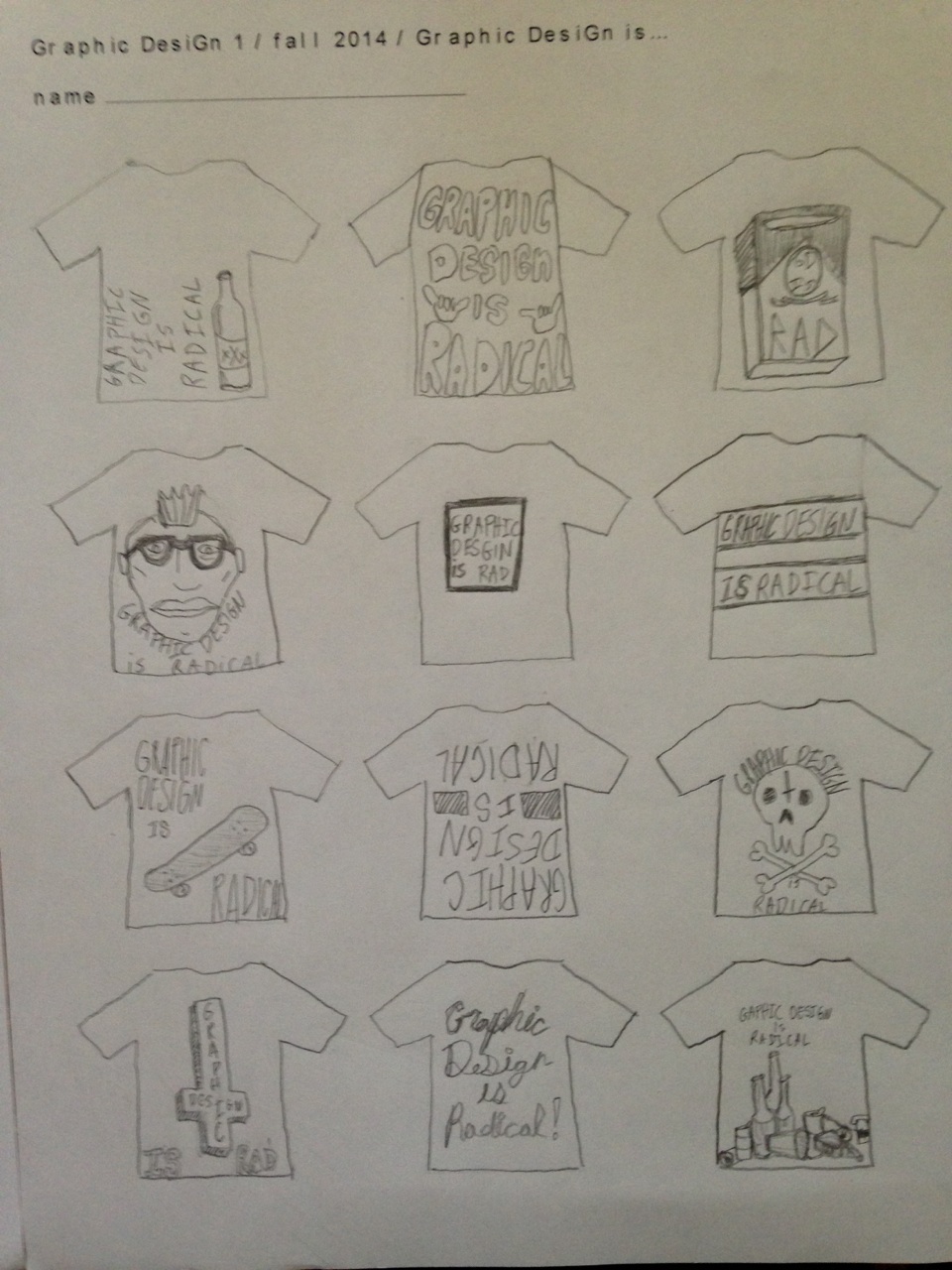
Graphic design is…
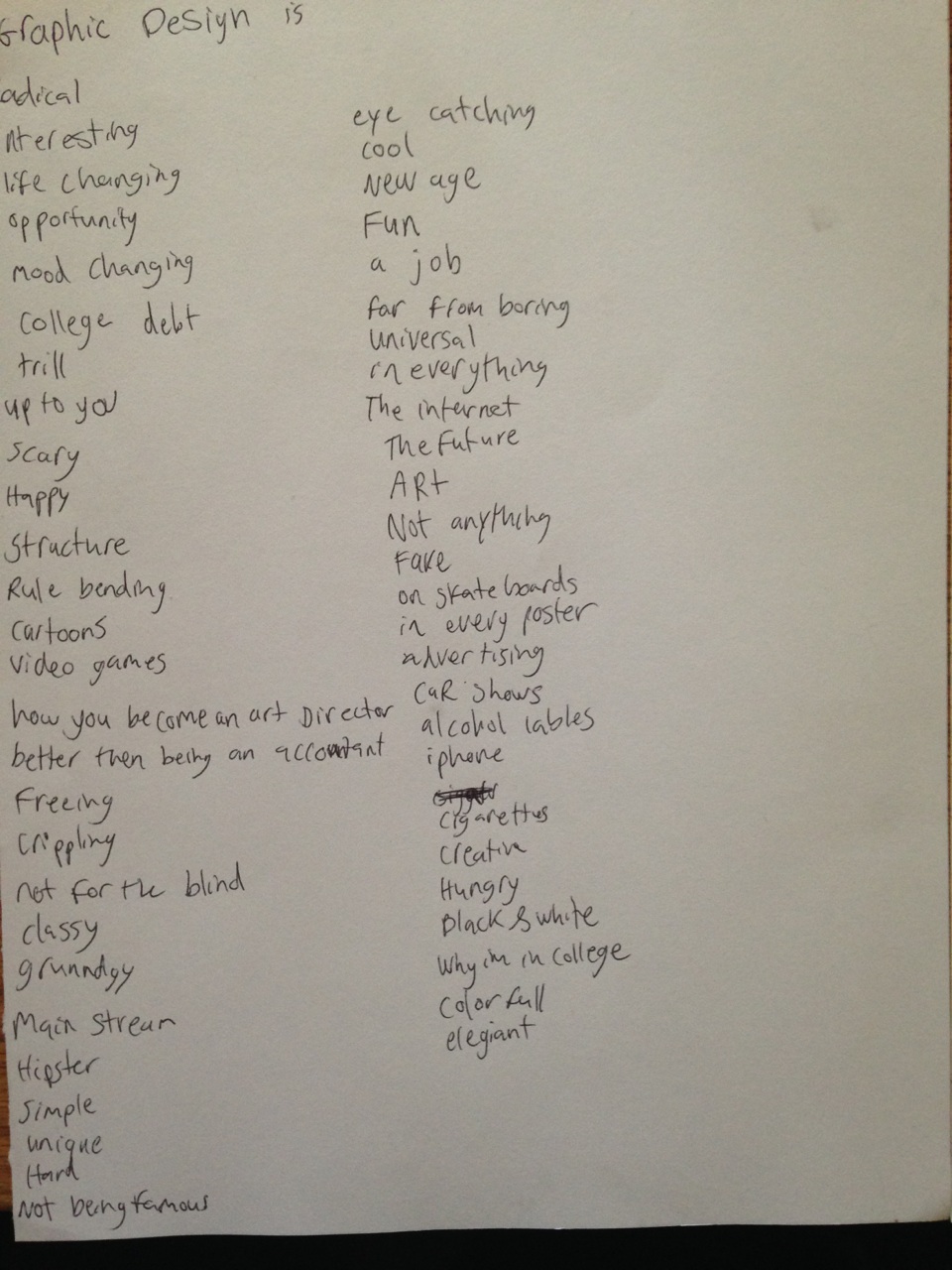
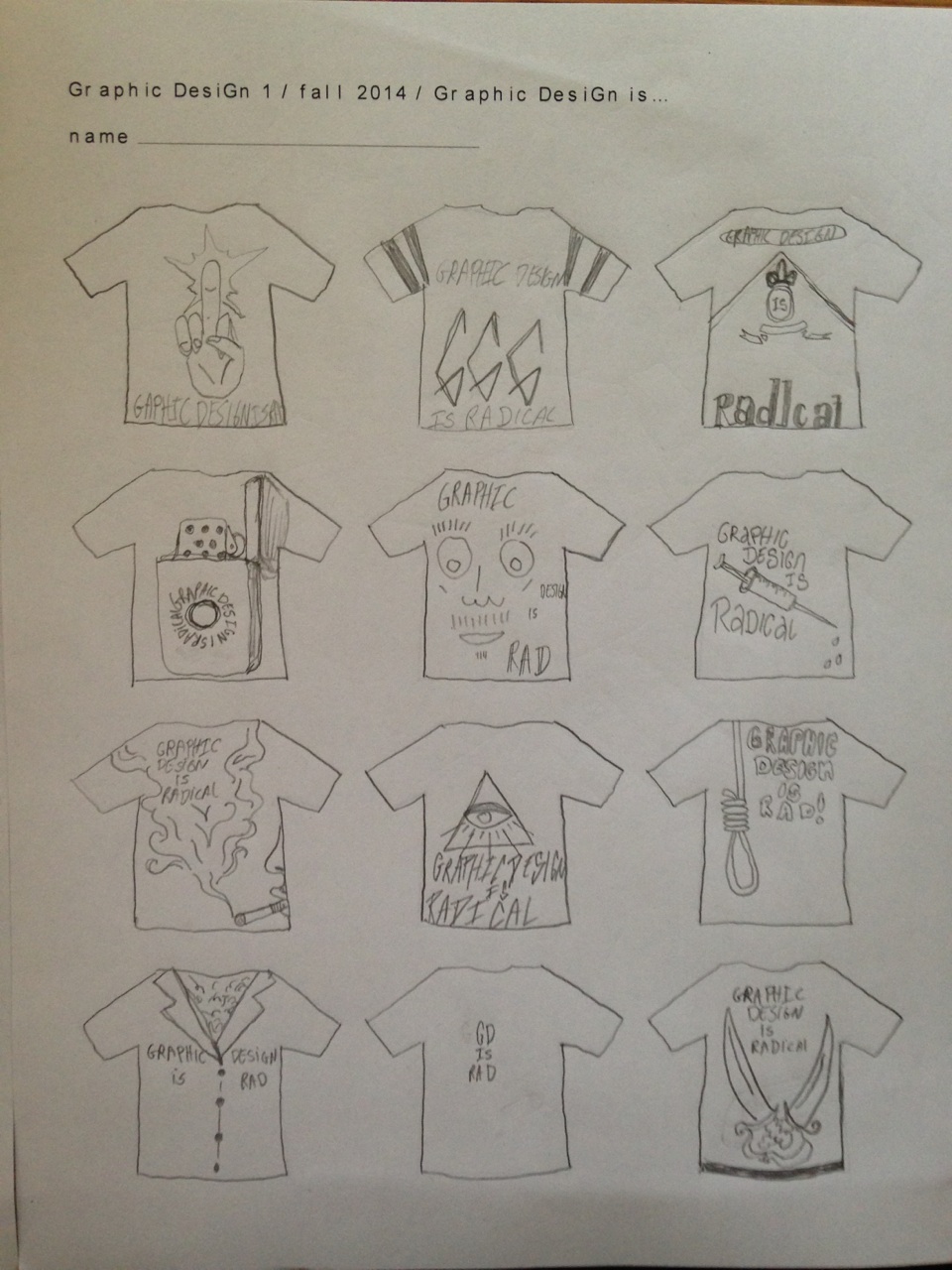
To me graphic design is the ability to change or provoke human emotion by creating something that someone can get lost in. Whether its a car show, redesigned airplane hanger,  the graphics on the bottom of a skateboard or even a brochure on apple picking you could create a way to get some one more interested then they should be. I would like this to be my career because as i go further into these classes in GD i am learning that I’m more interested in than i thought. Graphic design is also a much larger field then i thought it was. I had no idea that you can design rooms or large spaces which is an area i am interested in. But lastly to me graphic design is radical, i say this because you have the opportunity to use as much of your style into every assignment or project you have to do. That sort of ability is something that really draws me into what graphic design is.

Bob Gill

“I’ve never had a problem with a dumb client. There is no such thing as a bad client. Part of our job is to do good work and get the client to accept it.”

Paul Scher

“It’s through mistakes that you actually can grow. You have to get bad in order to get good.

this is the classic what doesn’t kill you makes you stronger. you have to make mistakes in order to get better or learn what doesnt work. you cant get every design perfect every time because that is just impossible.


Antoine de Saint-Exupéry

“A designer knows he has achieved perfection not when there is nothing left to add, but when there is nothing left to take away.”

Neville Brody

“Digital design is like painting, except the paint never dries.”

Lindon Leader

“I strive for two things in design: simplicity and clarity. Great design is born of those two things.”

IMG_2591 IMG_4465 IMG_7510

design comparison

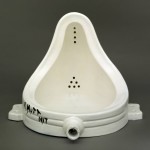
The first designer that i was drawn to immediately would be Marcel Duchamp, last year my favorite class i took was art history. In art history we learned about dada and the culture behind it. fountain was one of his most famous works and it was ground breaking at the time. Just like the book says “The dada movement was a reaction by artist to what they perceived as a world gone mad” Marcel Duchamp put this in an art gallery and it made people leave because they didn’t like seeing such vulgar work in a formal setting. The idea behind this work was that since it was a urinal flipped upside down the pee would just drain right back onto your feet. doesn’t seem like such a big deal but at the time it was incredibly edgy. Marcel also continued to pursue work like this in order to push dadaism further, he did this with the concept of everything could be art.

Lester Ball