Graphic Design: A Rich History
For anyone who has taken any form of an art history course this reading was very familiar. Graphic design, being an art form, shares a variety of common origins, inspiring faces, and pioneering concepts and theory’s with the stereotypical world of “art history”. It was interesting to read about these art movements for what seemed like the hundredth time, yet view work that I have never seen before. Seeing Cubism expressed through photography instead of yet another Picasso painting. Associating Surrealism with Man Ray rather then exhausting Salvatore Dali’s Persistence of Memory. While simultaneously gaining a better understanding of how societal events, trends, and findings influenced artists at the time. Certain time periods within graphic design history that I found interesting was the response to industrialization, the modern world, and modernism. Thus encompassing four noteworthy movements such as aestheticsm, cubism, surrealism, and psychedelic language.
Aestheticism
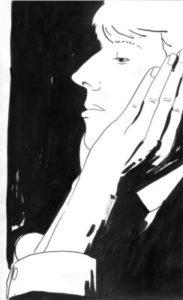
Aestheticism was an art movement that emerged within the 1870’s with an overall focus to create a deeper relationship between art and life. This mostly consisted of creating for the sake of creating and not being artistic through the lens of sociopolitical, economic, or industrial purposes. I interpreted this as artists exploring their freedom in their own medium, and creating art that they enjoy and that has a deeper meaning. After viewing a lot of Aubrey Beardsley’s work, the connection and influence of Japanese art is very evident, and even more modern versions of the art share similar qualities. Very simple, elegant work that often consists of ornamented faces, figures, and shapes, set in a neutral and pastel color schemes. I often see this kind of art all over Instagram and pinterest, and I think it is becoming very popular with my generation.


Links:
https://www.virtosuart.com/blog/what-makes-art-beautiful
https://www.tate.org.uk/whats-on/tate-britain/exhibition/aubrey-beardsley
https://www.boredart.com/2015/11/aesthetic-art-know-more-about-it.html
Cubism
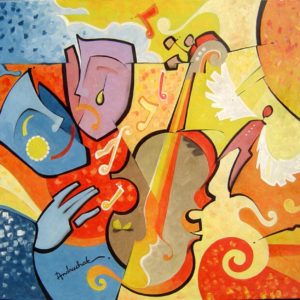
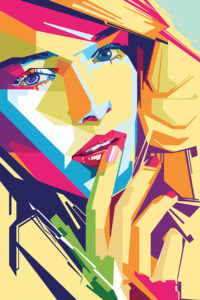
Cubism was yet another modern art movement, founded by both Pablo Picasso and George Braque’s. Their goal was to challenge the standards of art at the time and explore the different perspectives that the field offered. Unfortunately Cubism was not extremely successful during it’s pioneering moments due to the sheer opposition it held against the norm. Cubism pieces gave artists the chance to interpret space and form in new ways, often resulting in fragmented or broken looking images. Cubism is actually one of the more unique styles of art in my opinion, I like to think of it as taking a picture and cutting it into hundreds of smaller scraps only to reassemble them again in an entirely new composition. Due the scattered components and multiple different angles and perspectives shown within a cubism work, the viewer is forced to question what exactly it is they are looking at. by pairing this style of art with graphic design, designers have taken to creating simple faces or objects out of a variety of triangles and geometric shapes.

Links:
https://www.ucreative.com/inspiration/30-impressive-samples-of-cubism-in-graphic-design/
http://alfalfastudio.com/2016/03/05/20-cubism-inspired-emojis-by-nod-young/
https://www.trendhunter.com/slideshow/contemporary-cubism
Surrealism
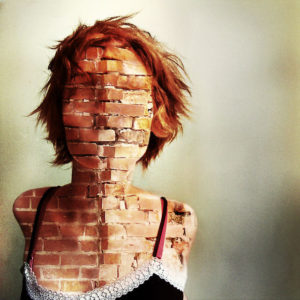
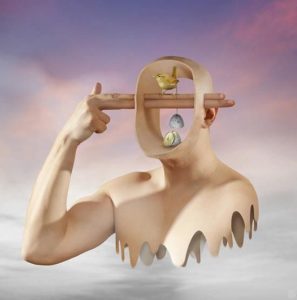
Surrealism was a lot like it’s cousin Cubism in the sense that it was very different then what people were used to seeing. The underlying concept being that the subject matter consist of images that would “psychologically shock” you. The art that was birthed from this movement was meant to be more then it appeared to be, and truly make the onlooker think about what the artist was trying to convey. My favorite thing about this movement was that it served as a gateway to the unconscious, surrealism art was magical, unconventional, and full of fantasy with no room for wrong answers. When I first learned about this particular style, my brain immediately jumped too The Adventures of Shark Boy and Lava Girl and the “Land of Milk and Cookies.” However what I did not realize is that what started as a pioneering art form has become extremely commercialized and invested in advertising and social media. In fact, some of the examples I saw for surrealism advertising, I never even thought of as art, all I saw was the product that was being sold.

Links:
https://www.youtube.com/watch?v=0EeL2FeI7NA
https://artvoice.com/2019/10/25/122443/
https://in.pinterest.com/pin/478155685422449278/
Psychedelic Language
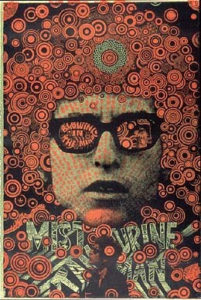
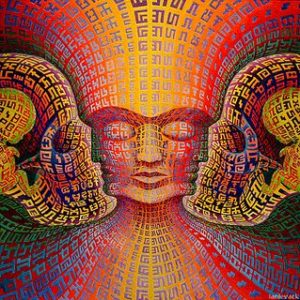
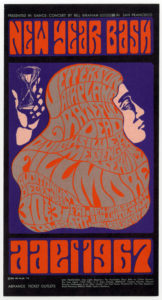
The 1960’s was a decade characterized by bell bottoms, go-go boots, tie dye T-shirts, Afros, and the growing popularity of psychedelics. Therefore it’s no surprise that the art was influenced by these mainstream trends. “Psychedelic language” was created using hand drawn lettering because it made it easier to manipulate, stretch, render illegible, and overall be more creative with. The drawings and images that were produced were designed to mimic the feeling of “tripping” and the things people would experience while using drugs. Resulting in images that not everyone would understand, while simultaneously involving many individuals in a “secret”… and who doesn’t want to feel like they are a part of a secret? To many it felt as a rebellion against typical domesticated america. Psychedelic graphics defiantly do not appeal to everyone, as drugs are often highlighted in a negative way and associated with violence, addiction, and low lives. Yet that doesn’t mean we cant appreciate the flip side: Euphoria, serenity, an freedom, which is exactly what is being portrayed in this type of art.
Links:
https://www.pinterest.com/spikedcandy/psychedelic-art-in-vintage-advertising/
https://lobopopart.com.br/en/psychedelic-art/
http://www.101exhibit.com/exhibitions/ted-vasin#works-3
Conclusion
overall it was very interesting to read about how graphic design as grown throughout the years. A typical art history class primarily focuses on formal analysis of a time period’s techniques and use of subject matter. Therefore it was interesting to read more about what was going on outside of the art that then later influenced the artist’s trends and direction. Cubism was closely connected to relative findings of Einstein, Sigmund Freud’s research in psychology greatly influenced the popularity of surrealism, and “psychedelic language” would not have surfaced if it weren’t for 1960’s “hippies”. looking at these different ways of thinking about and creating art does nothing but feed the innovative mind. As an artist I would really love to experiment within the areas of cubism and psychedelic language, I think both areas would be fun to play around with and see what my own unique twist might add.
