Through the years of our existence, graphic design has been shaped by social, cultural, political, and technological circumstances. Graphic design has changed and evolved over the years and knowing the history of a piece of art, can help improve knowledge and give others inspiration. Graphic design today, is the result of many art movements in history combined together. It is important to understand the importance and characteristics of each movement to fully understand the magnificence and significance of different pieces.
Arts and Crafts Movement (1880-1910)
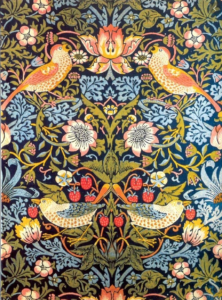
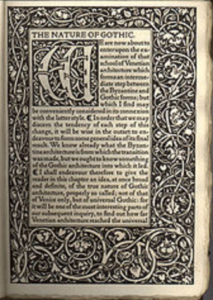
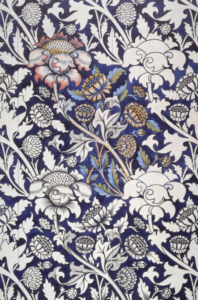
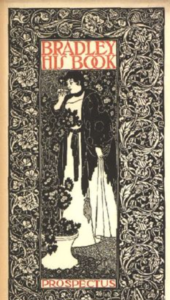
This is one of the first important movements in graphic design history. It is the first full scale art movement with a focus on a particular approach to art. William Morris is the name from this movement that devoted himself to a way of art that looked back to the middle ages and embraced the natural form of art in that era. William Morris captured the handcrafted art forms from the past by beautifully pressing them onto materials. Morris also designed three typefaces that represented the fifteenth century time period. Morris brought his movement, not only to a paper, but to furniture and cabinet making, wallpaper, ceramics, and textile and stained glass design. This movement to me is absolutely beautiful. The delicate involvement of all the floral and fifteenth century patterns is amazing. The fact that one can create that is fascinating and I truly picked this movement to write about because I just find these pieces so fine and intricate.
Links
Technology Student; Arts and Crafts
Gallery
Futurism (1910-1918)
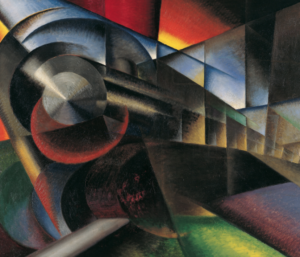
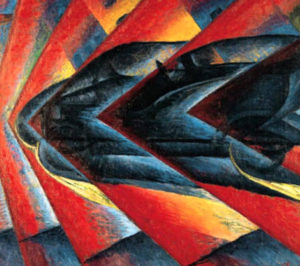
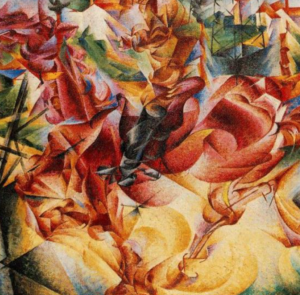
This art movement brought freedom and expression to artists. Filippo Marinetti established this movement with a manifesto just like William Morris in the Arts and Crafts movement. Filippo’s art was focused more on science than classical forms. When it came to typography, the usual alignments were thrown out the window and letters were used as expressive objects. This art movement focused on the fact that one can distort and reshape the way things look to make their piece of art more expressive to themselves. Many futurism artists also mixed in the components of cubism to to create a hybrid style. Futurism has always been intruiging to me because of the freedom these pieces hold. There is no right or wrong when it comes to this type of art and the artist isn’t restricted to any specific colors or boundaries.
Links
Gallery
Surrealism (1924-1955)
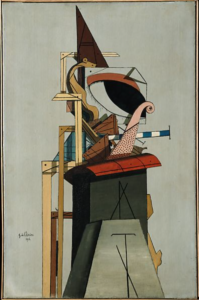
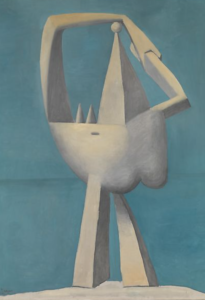
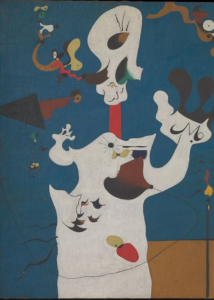
Surrealism took over when the Dada movement was coming to a close. This movement focuses on psychologically based images that caused shock and surprise during its time. This type of art explores the mind and arouses curiosity within its audience. This type of art rejects rational thinking and expressive. Many pieces of this type of art was images from the artists unconscious mind and others are responses to them depicting dream worlds and hidden psychological tensions. This art movement is extremely interesting because it pushes the boundaries more than any other movement and there is truly no way of fully understanding each piece to it’s full potential. These pieces are made to make you think and are there for you to interpret what you believe they mean. Surrealism interests me the same way futurism appeals to me. There is no right or wrong when it comes to these pieces either. The artists can express and incorporate the very back of their minds through their artwork. There are no set patterns or guidelines and these pieces may just appear funky, but if you take the time to analyze them, you can find things and piece things together to make out a bigger picture.
Links
Gallery
De Stijl (1917-1931)
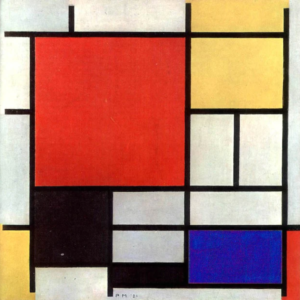
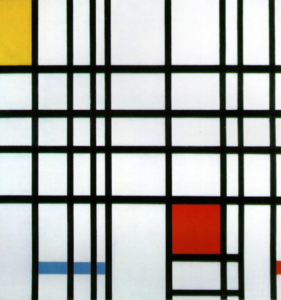
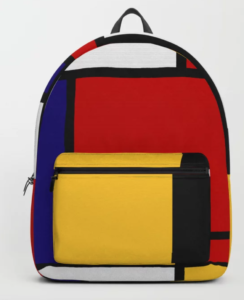
This was a dutch abstract movement that was known for its straight lines, right angles, and primary colors. Piet Monet is responsible for this movement as in 1920 he published the De Stijl manifesto. His Neo-Plasticism became another name for the movement and within this manifesto, he rejected symmetry and he pushed for the manipulation and arrangement of geometric forms and colors. He called this “dynamic equilibrium.” This type of art was brought to architecture by Gerrit Rietveld, and has been continued to be being used to this day. I found this period of graphic design interesting because not only is it a way of art, but a typeface was created based on this period. Because the movement was known for its straight lines and right angles, a font by the name of Doesburg was created and it proved that in typeface, curves and diagonals could be absent. This movement brings me back to my childhood which is why I find it so interesting. The straight lines and precise right angles along with the use of only primary colors brings me back to when I was a child. I honestly cannot say why it does, but it just reminds me of when I was growing up. This work is so simple but so eye pleasing and I find it very professional yet playful!
Links
Gallery
Summary
There are many other movements that has contributed to graphic design but these are just four that caught my eye. Although these movements are so different from each other, I find them fascinating. They express different ideas and I find it so interesting how they all contribute to graphic design today. Knowing the history of art is so important, and after reading this chapter I find it even more important. Being knowledgeable on the history not only makes one more intelligent, but also helps one analyze art and truly understand the meaning of each piece.
