• Ê
  • Â

å September 2015
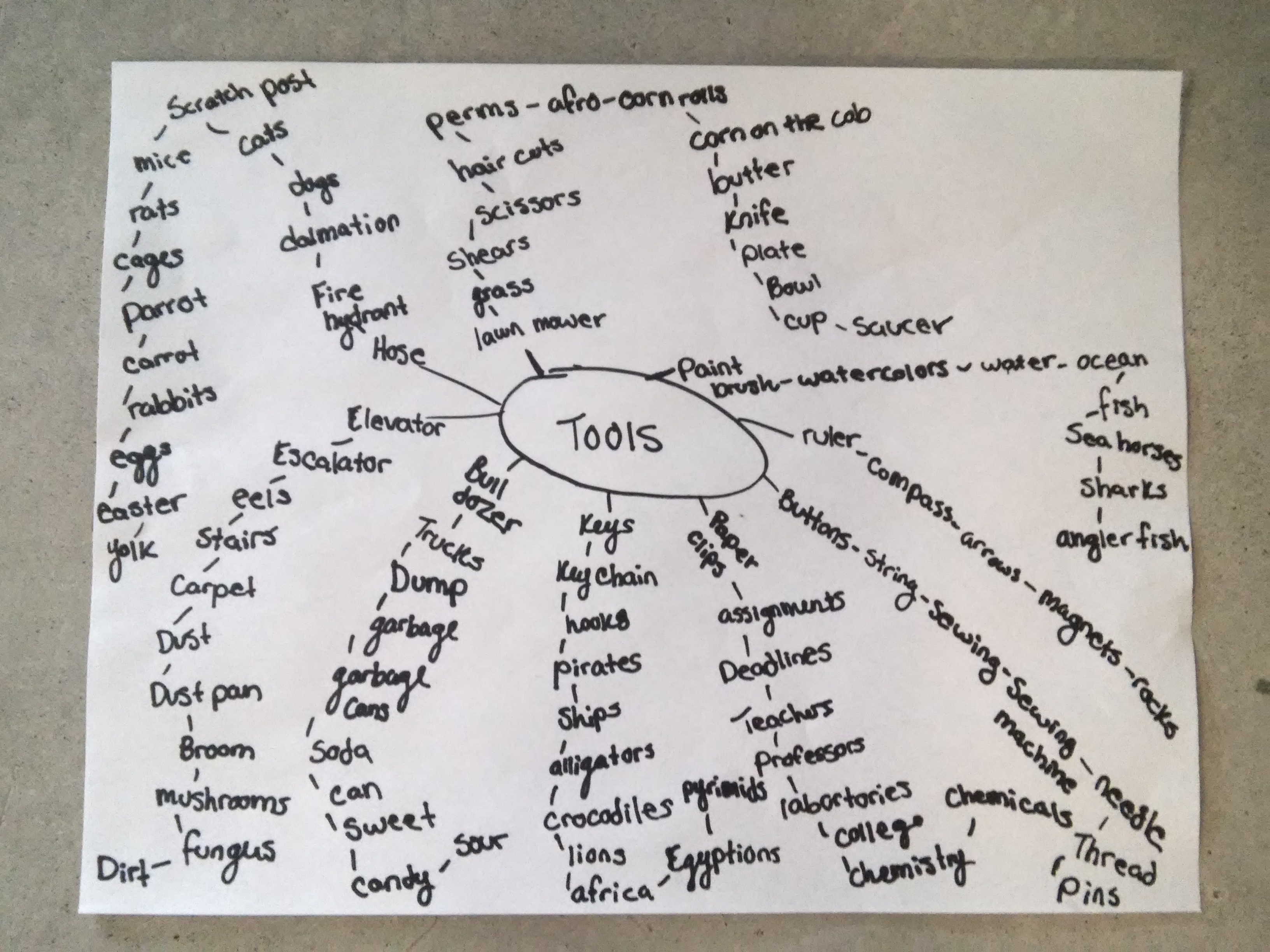
My Response

I thought this was a very fun and enjoyable project that was also helpful and educational on the creative/invention process. As I have never done a mind map before, I was surprised by how many great ideas can actually come out of them. I enjoyed getting together with my group members for the mind map. It was fun to see how different minds can think of totally different things when they hear a word and still work together and be as imaginative as possible.

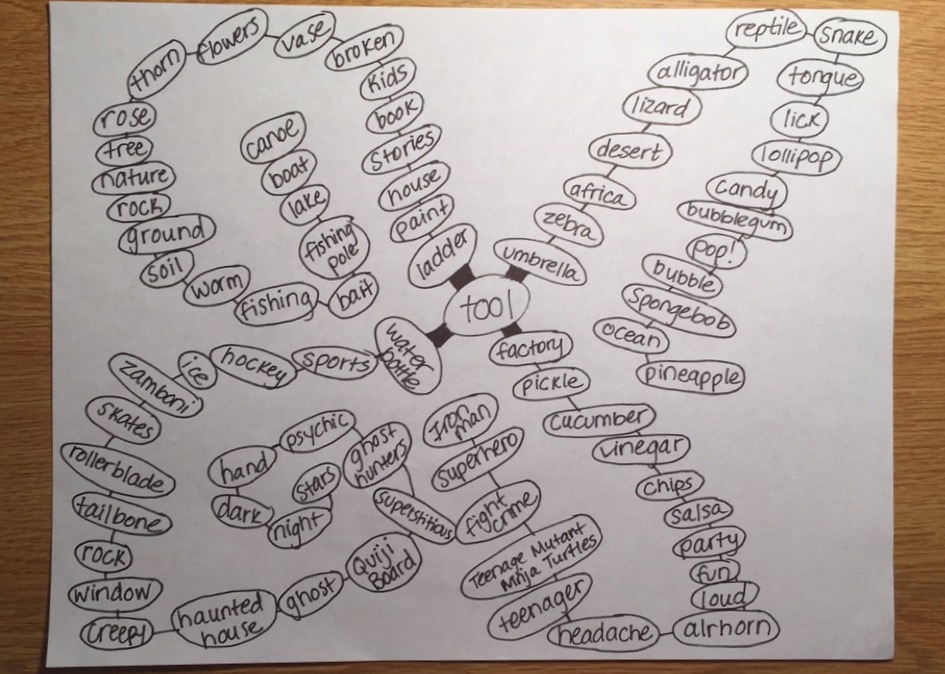
My Mind Map

FullSizeRender-2


25 Pairs

  1. Snake + Vase
  2. Rose + Umbrella
  3. Zebra + Bubblegum
  4. Hand + Ice
  5. Lizard + Lollipop
  6. Loud + Quiji board
  7. Dentures + Makeup
  8. Penny + Lipstick
  9. Piñata + Garden
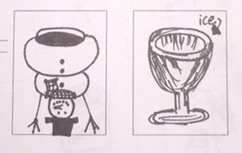
  10. Snowman + Wine glass
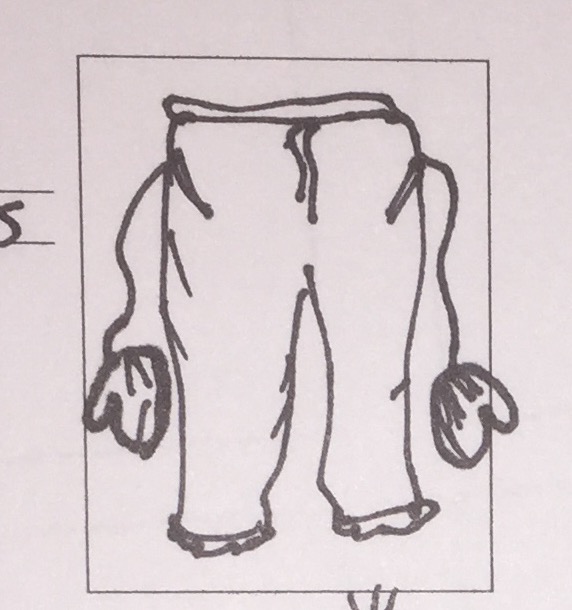
  11. Mittens + Sweatpants
  12. Foam Finger + Water gun
  13. Rollercoaster + Music
  14. Bubblewrap + Car
  15. Haunted house + Party
  16. Book + Ladder
  17. Candy + Paint
  18. Salsa + Water Bottle
  19. Zamboni + Party
  20. Candy + Pickle
  21. Fishing pole + Tree
  22. Reptile + Airhorn
  23. Candy + Salsa
  24. Boat + Party
  25. Hand + Airhorn

My 10 Choices

  1. Snake + Vase: A stylish vase for reptile lovers to hold their flowers made of perhaps snake skin pattern or maybe an actual snake!
  2. Zebra + Bubblegum: My first thought was patterned gum. Our clothing, bags, scarves and accessories all have perhaps tribal, cheetah or even zebra print, why not our gum? Would someone be willing to spend extra few cents to have “pretty” gum as opposed to “regular” gum?
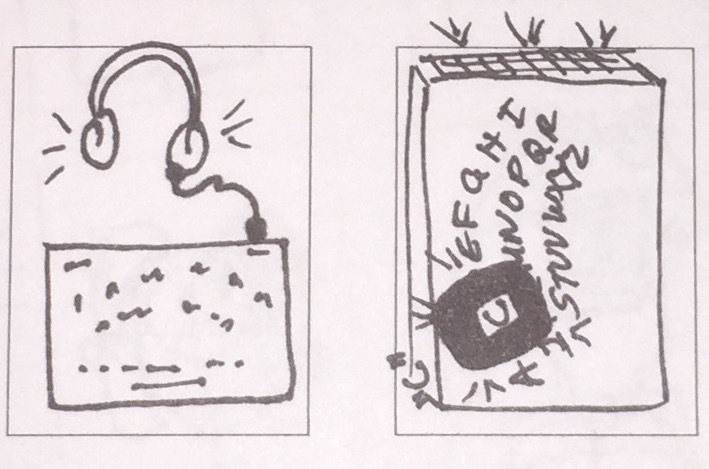
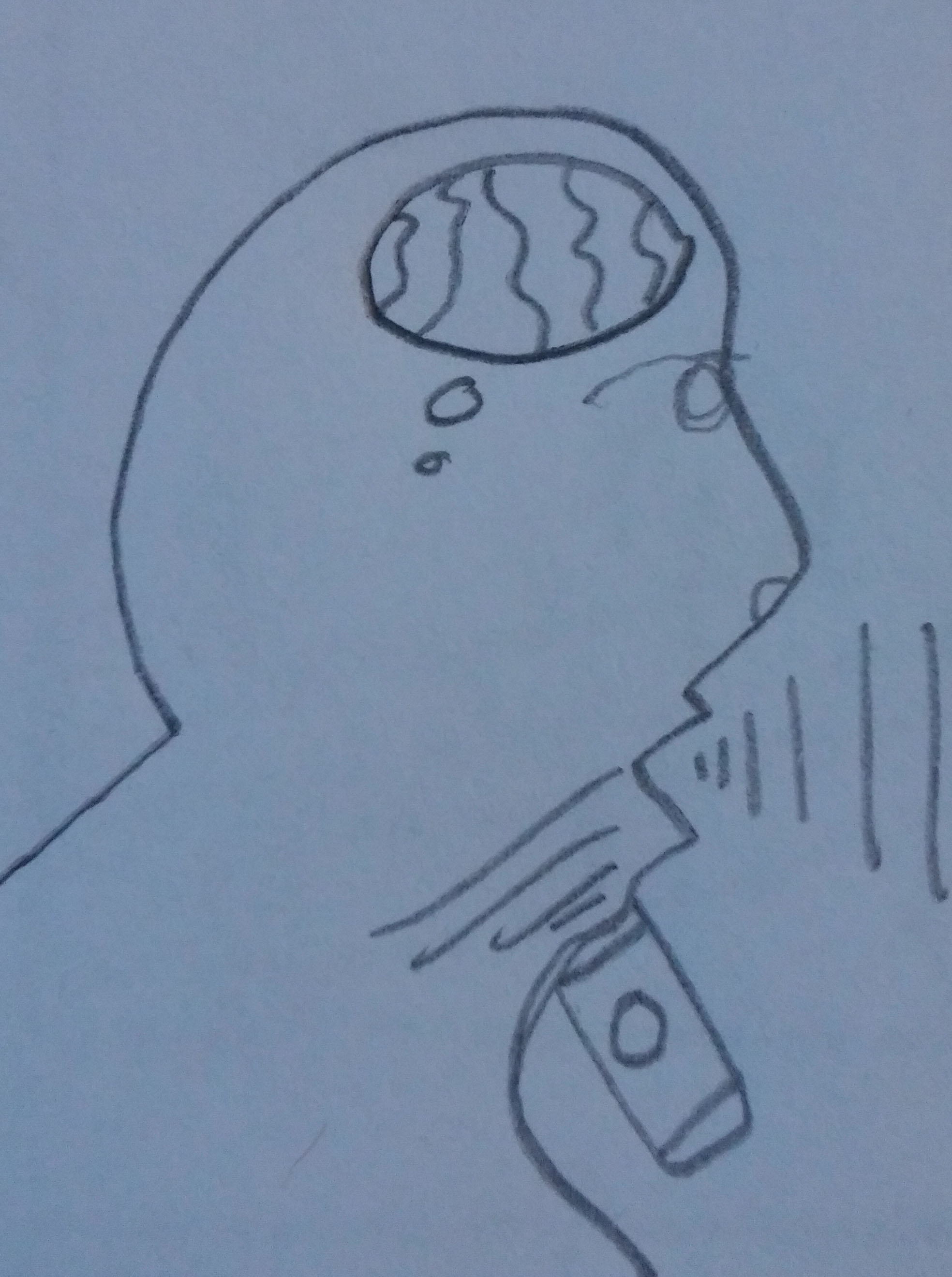
  3. Loud + Quiji Board: My first thought was a creepy voice that narrates whats happening on the board and maybe it will “hear” and “translate” some things that our human ears can’t just for extra spookiness. Maybe a speaking Quiji board could be helpful to any blind users as well?
  4. Snowman + Wine glass: We have chilled mugs for beer, why not a chilled wine glass that is also cute and winter-festive. I thought of a snowman doing a handstand would be the shape of a wine glass. Or perhaps an actual wine glass made out of snow or ice?
  5. Mittens + Sweatpants: I thought of cold nights when you don’t want to take your hands out of your sweatpants pockets. So what if in each pocket was a mitten with a string attached so you can keep your hands warms and never loose your mittens/gloves!
  6. Foam finger + Watere gun: How much fun would a sports game be if you could cheer on your team with your #1 foam finger and at the same time squirt some playful water at your opponents fans? It would keep your kids entertained for longer as well!
  7. Rollercoaster + Music: A lot of people resort to music when they are feeling anxious or scared or sad. These feelings can definitely come up on a roller coaster so what if a little music selection was offered as you ride to your death and it streamed through the bars over your shoulders.
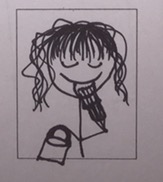
  8. Candy + Paint: We have rock candy, candy cigarettes, insect candy, why not add another misleading candy to the list and make a little can of “paint” that is actually a sugary/syrupy liquid that kids can “paint” on their tongues with the “paintbrush” included.
  9. Candy + Salsa: My first thought was salsa being a mixture of various vegetables so what if there was a jelly bean, m & m, licorice, with a batter/ dough type substance as the base.
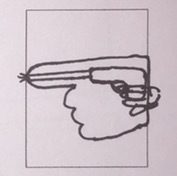
  10. Hand + Airhorn: A small, but effective hand held airhorn that is made to fit the mold of one hand making a fist.

Thumbnails

FullSizeRender

(Mittens + Sweatpants)


Unknown

(Wine glass + Snowman)


FullSizeRender-3

(Candy + Paint)


FullSizeRender-2

(Foam finger + Water gun)


FullSizeRender-1

(Loud + Ouija board)

4 Tool Post   b Add comment

Leave a Reply

Mind Map
FullSizeRender 4

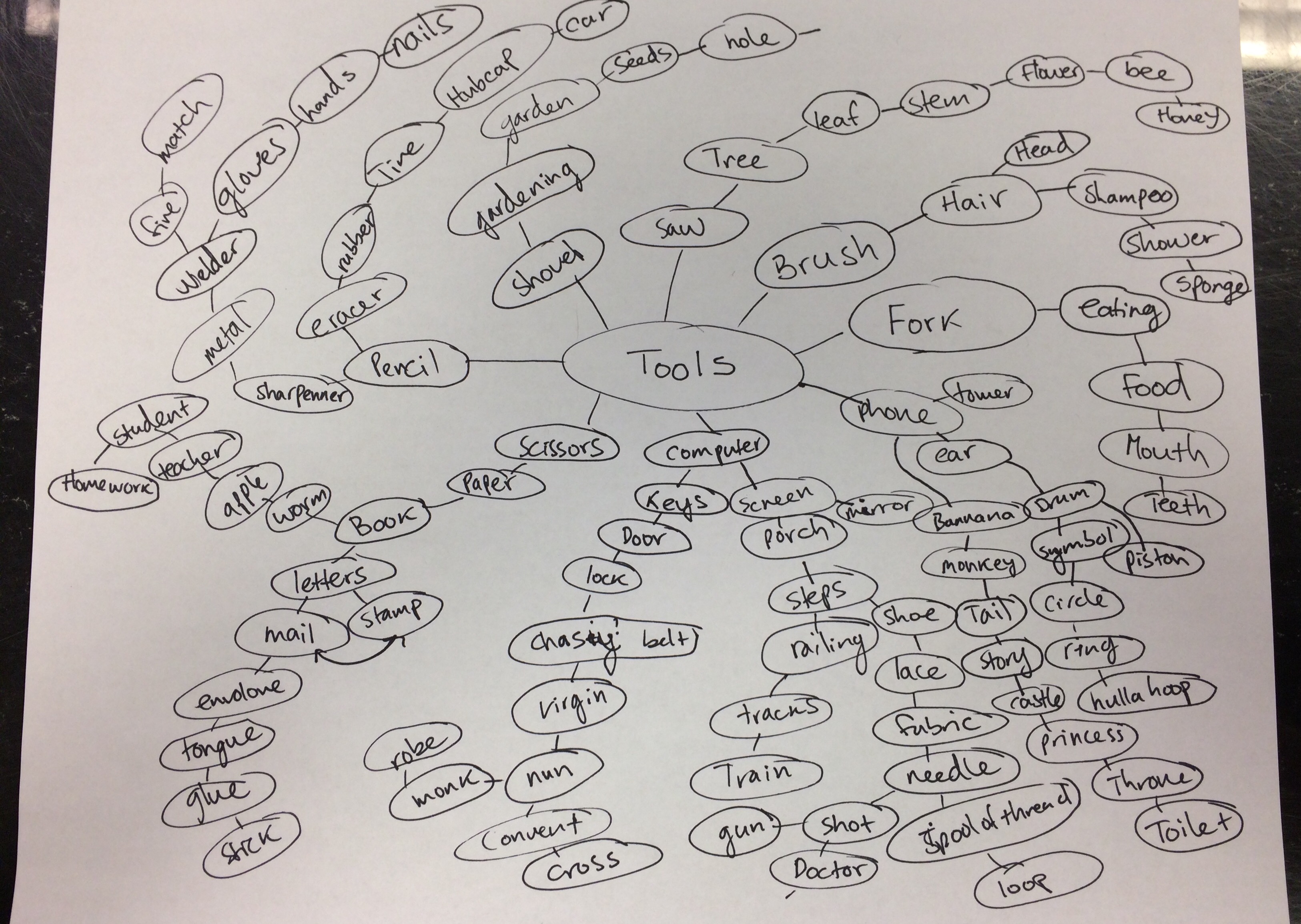
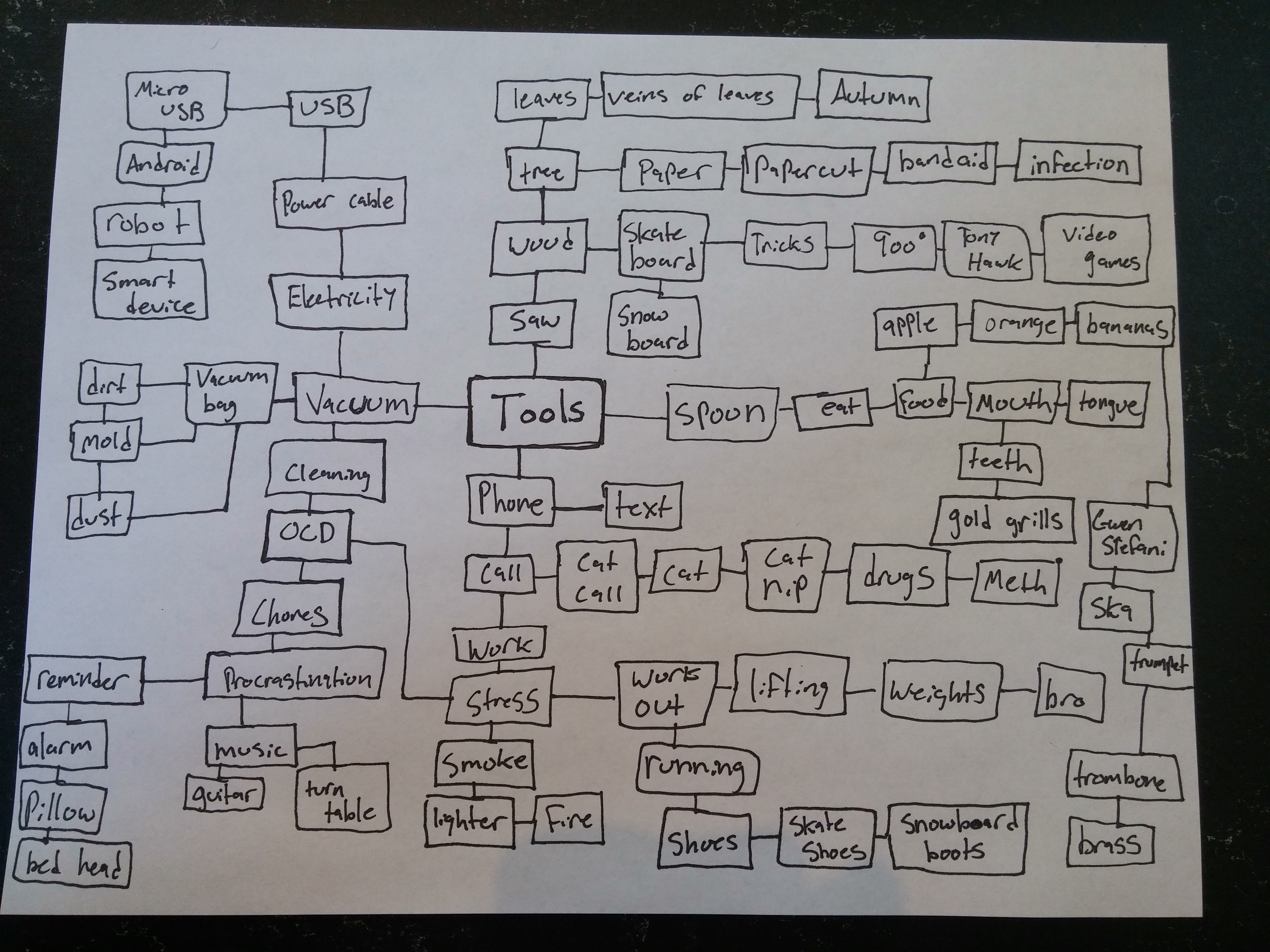
This is one of the three mind maps that my group of four came up with. Mind mapping is actually a new concept to me, and I think they’re pretty cool so far. It’s interesting to see how far you can run with a thought and what those thoughts can develop into, especially in a group of people who all think differently. Having the ability to bounce ideas off of each other was definitely helpful.

My 25 Original Pairings
1. Saw + Teeth
2. Elephant + Megaphone
3. Trampoline + Drum
4. Snake + Stapler
5. Drill + Noodle
6. Brush + Puzzle
7. Phone + Shovel
8. Spatula + Lamp
9. Keys + Ponytail
10. Shoe + Rocket
11. Suitcase + Computer
12. Scissors + Hook
13. Mittens + Cheese
14. Dish + Boat
15. Match + Bug
16. Sword + Fan
17. Nun + Clown
18. Pencil + Whip
19. Fork + Worm
20. Gun + Cup
21. Telescope + Cannon
22. Car + Hula Hoop
23. Meat + Tree
24. Bottle + Glasses
25. Chain + Tail

My 10 Choices
1. Saw + Teeth
I automatically thought of the “teeth” on a saw, and thought it’d be comical to have them look like actual human teeth. I doubt that would actually help in cutting anything down though… unless you brushed and flossed every day, of course.
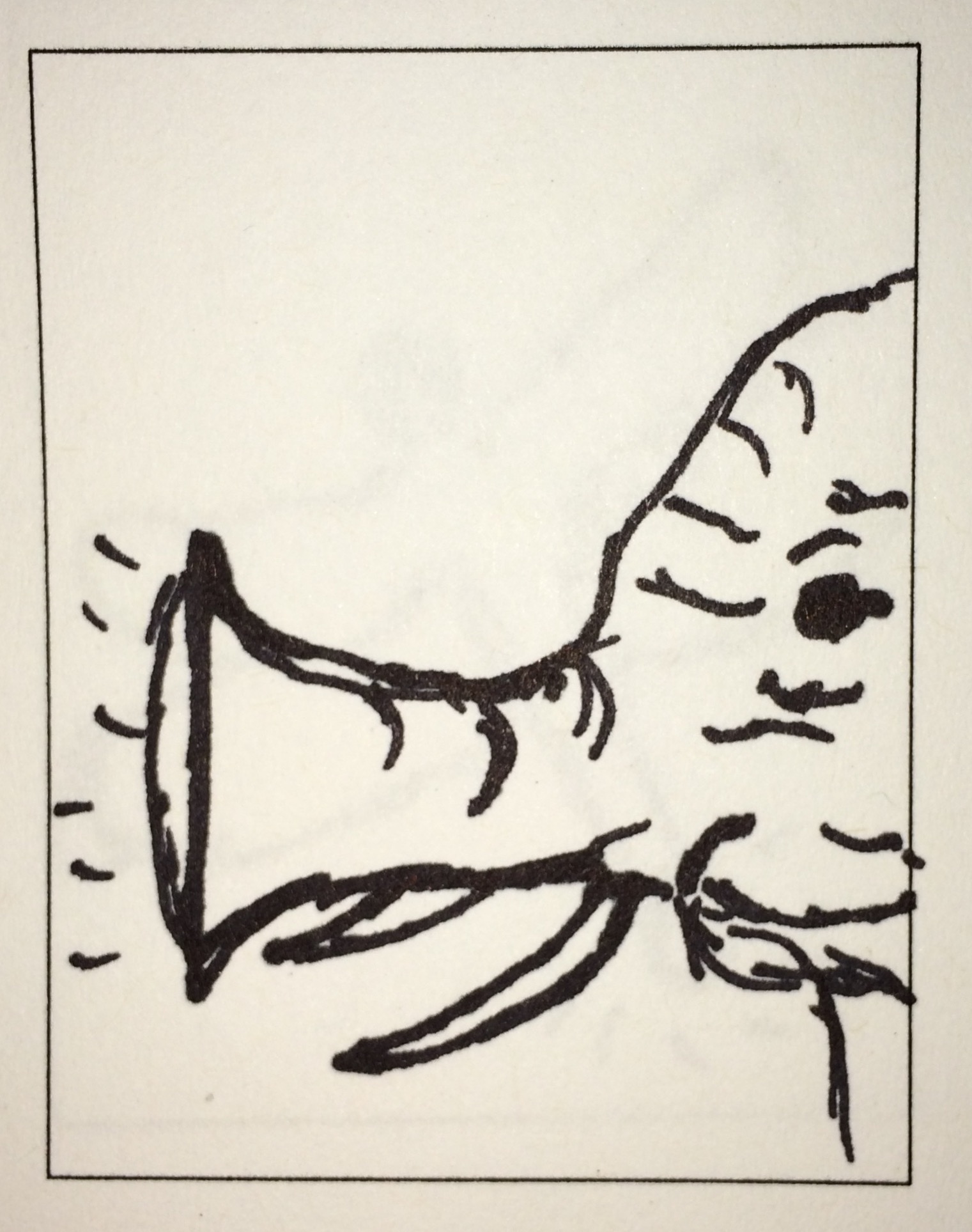
2. Megaphone + Elephant
A megaphone is slightly similar to an elephant’s trunk appearance-wise, so why not switch them up and maximize the volume of their breathing, am i right?!
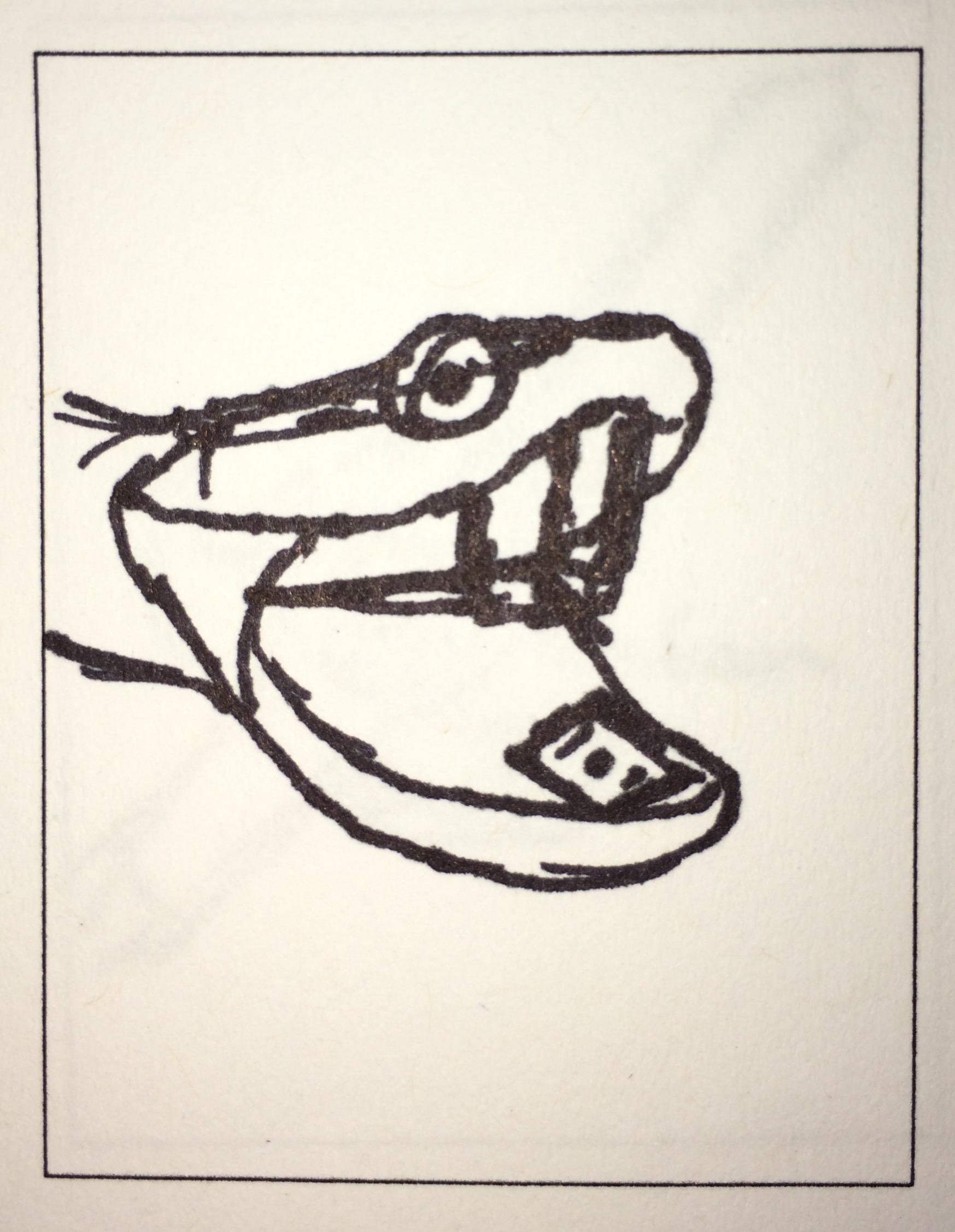
3. Snake + Stapler
This probably would have worked better if the snake was paired with a staple remover, because of the resemblance between that and a snake’s fangs, but this was the next best thing in my opinion. All you have to do is bop the (hopefully dead) snake on the head and voilà, you have a stapled set of papers and you looked cool (and brave) doing it.
4. Drill + Noodle
This idea popped into my head while thinking of drill bits and the similarities in appearance between them and certain pasta noodles, so I thought it would be fun to see where the combination could go.
5. Phone + Shovel
I have ABSOLUTELY no idea as to why or how this combination popped into my head so fast, but I automatically thought of the slide-out keyboard cellphones we used to have in middle school. For some odd reason, I thought it would be a fantastic idea to replace the slide-out keyboard with a shovel… y’know, just in case you need to go digging and you forget your actual shovel at home.
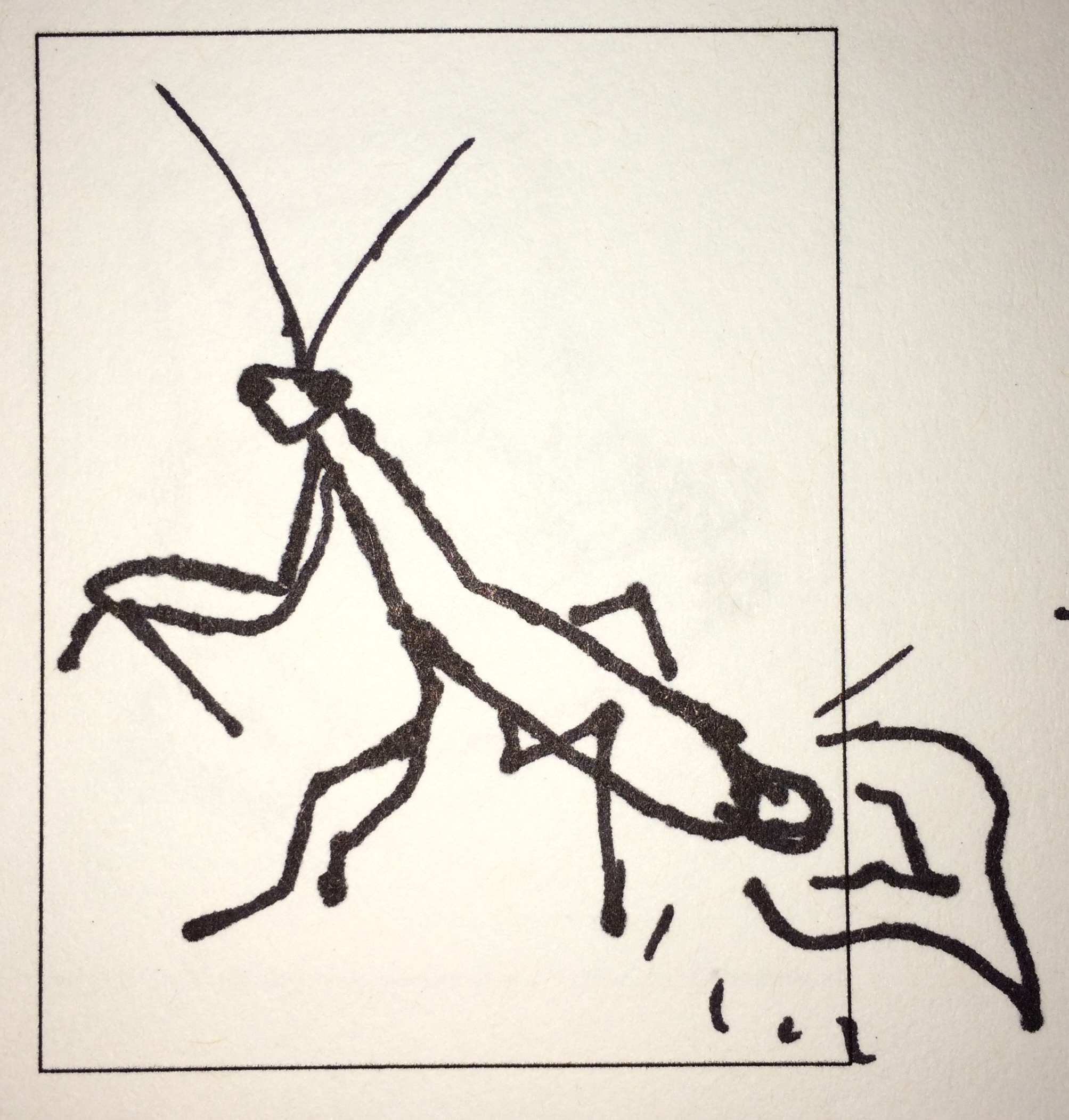
6. Match + Bug
For this combination, I kept coming back to the idea of the way certain bugs’ bodies are, and how thin and similar to a match some of them look (praying mantis, dragon fly, stick bug, etc.), so I thought of replacing the actual body with one.
7. Sword + Fan
I had a feeling that, in medieval times, fans would have been made out of the same blades swords were made out of as a sort of torture device (or just to circulate some air). I also thought of how nice it would’ve been for knights to have a fan built IN to their swords, especially with all of the heavy armor they had to wear. Refreshment on the go.
8. Fork + Worm
For this one, I thought it would be funny (and gross) to shape worms into the shape of a fork and/or wrap the worms around a regular fork to make them look like spaghetti.
9. Car + Hula Hoop
I had a few different ideas when it came to this pairing. The first two were to make the wheels on a car and the steering wheel inside a car into hula hoops, and the third was to make a person look like they were hula hooping a limousine (because of how long they are, which I thought was fitting).
10. Suitcase + Computer
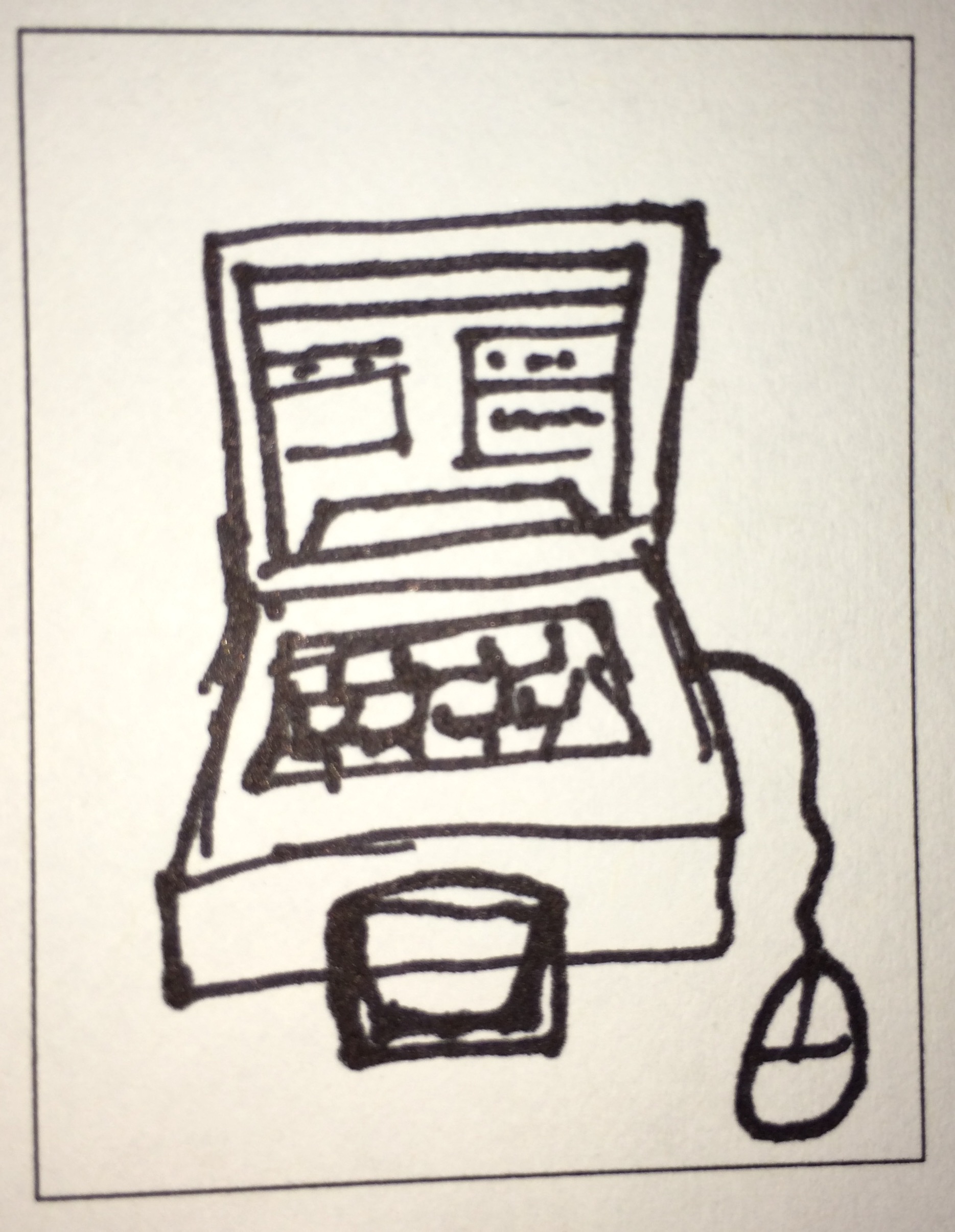
I call this one “The TRAVEL Computer”, which makes no sense at this point in time because that’s why laptops were invented. I thought that the way a suit case un-hinges and the way a laptop opens was pretty similar, so I went with it. I wouldn’t recommend buying it, though, because I can guarantee you won’t have too much space left to use to pack clothes.

Thumbnails
FullSizeRender 5 FullSizeRender 2 FullSizeRender 3 FullSizeRender

Overall
I thought this assignment was very interesting. Like I had said earlier, it’s something I had never done before and It was cool to branch out (even literally too, in the mind maps). It truly showed me how much thought goes into the early stages of design work, and how helpful it is to have a plethora of different ideas to grab from.


4 Tool Post   b Add comment

Leave a Reply

This assignment was great. I liked how our groups had to get together and brainstorm off each others ideas. What truly helped me in the process of creating my own tools were the extra mind maps. I know that everyone has different ideas, it was helpful to branch one of mine with another person’s idea.

Mindmap3


This is one of my group’s mind map. Exercising mind mapping helped me organize my thoughts with the others. It’s always tough for me to quickly think of creative ideas, however brainstorming on a mind with a team of designers made the process simpler. One of my favorite ideas on this mind map is how we got the idea Cat Nip from others branching off the idea Call.

Here are my 25 tool ideas based off mind mapping. The bold Tools are the “Chosen Ones“.

  1. Bed Head Balloon
  2. Cat Nip Cookie
  3. Prom Wrench
  4. Tiger Knife
  5. Water Vacuum
  6. Cat Call Alarm
  7. OCD Pillow Vacuum
  8. Toilet Backpack
  9. Alphabet Guns
  10. Lighter Pocket
  11. Karate Skateboard
  12. Karate Lighter
  13. Throw Up Vacuum
  14. Grill Knife
  15. Smart Grill
  16. Banana Foam
  17. Chocolate Band aid
  18. Energy Honey
  19. Hospital Bed Weights
  20. Pumpkin Spoon
  21. Dirt Ball
  22. War Nails
  23. Bear Belt
  24. Bulimic Banana
  25. Language Machine

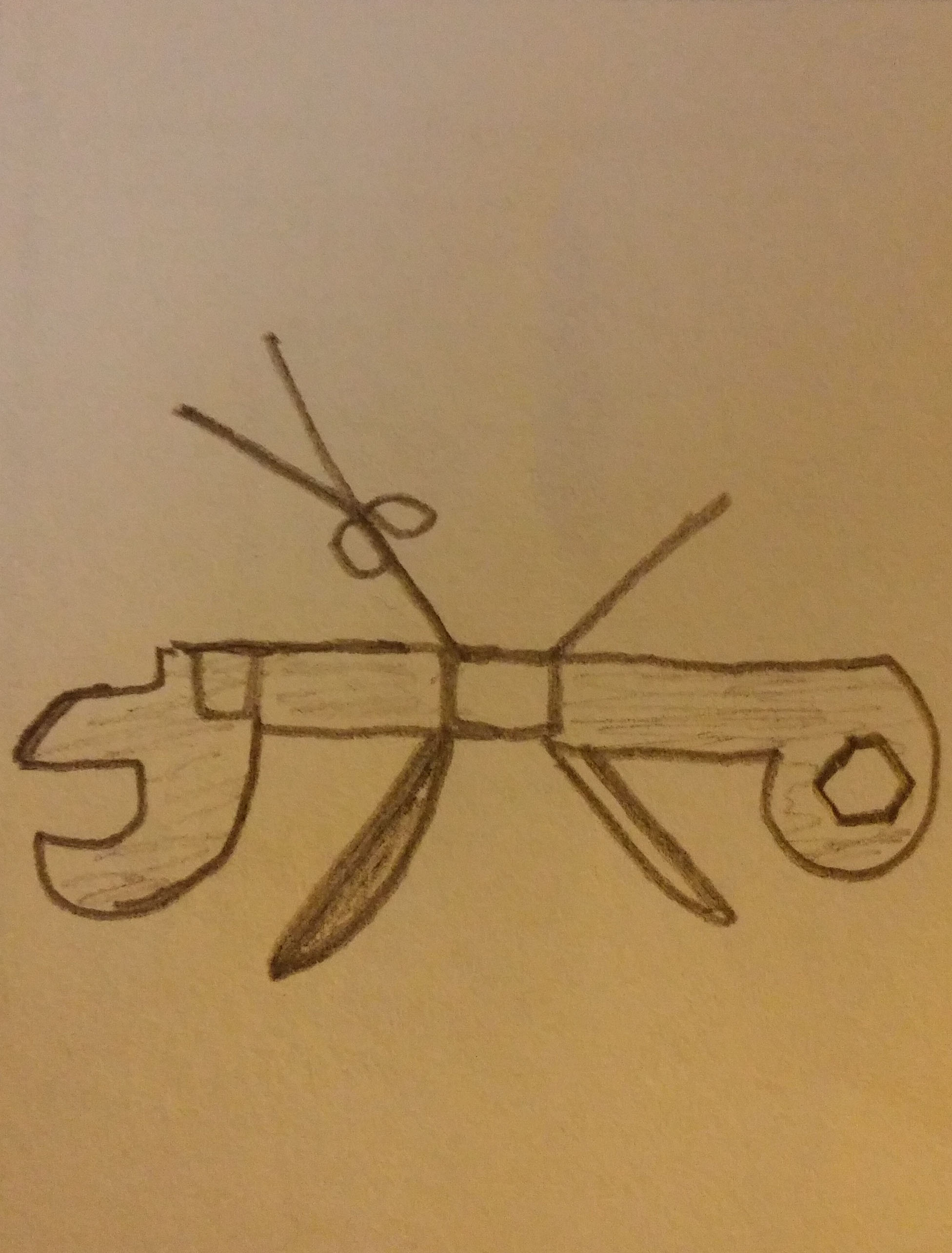
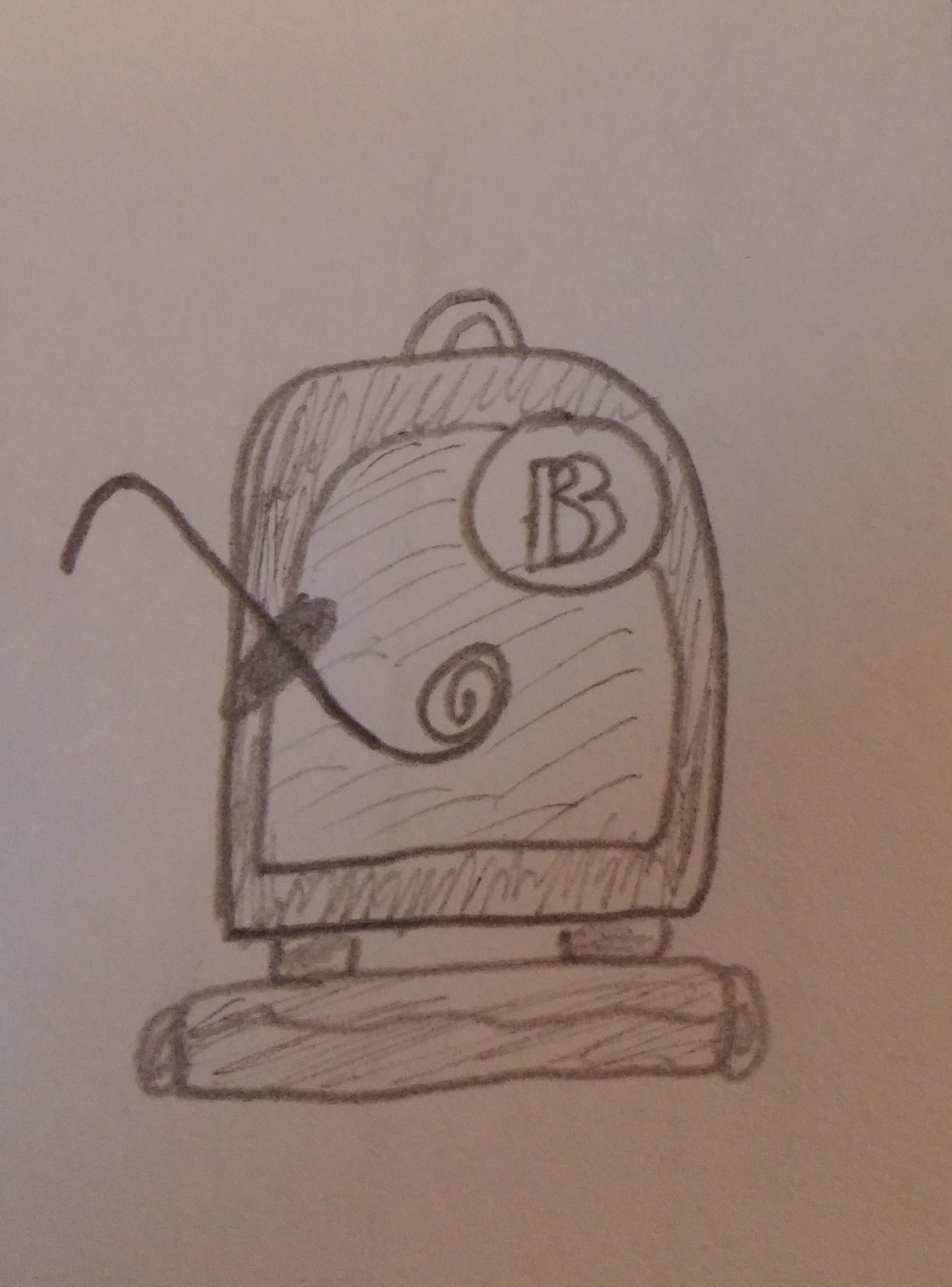
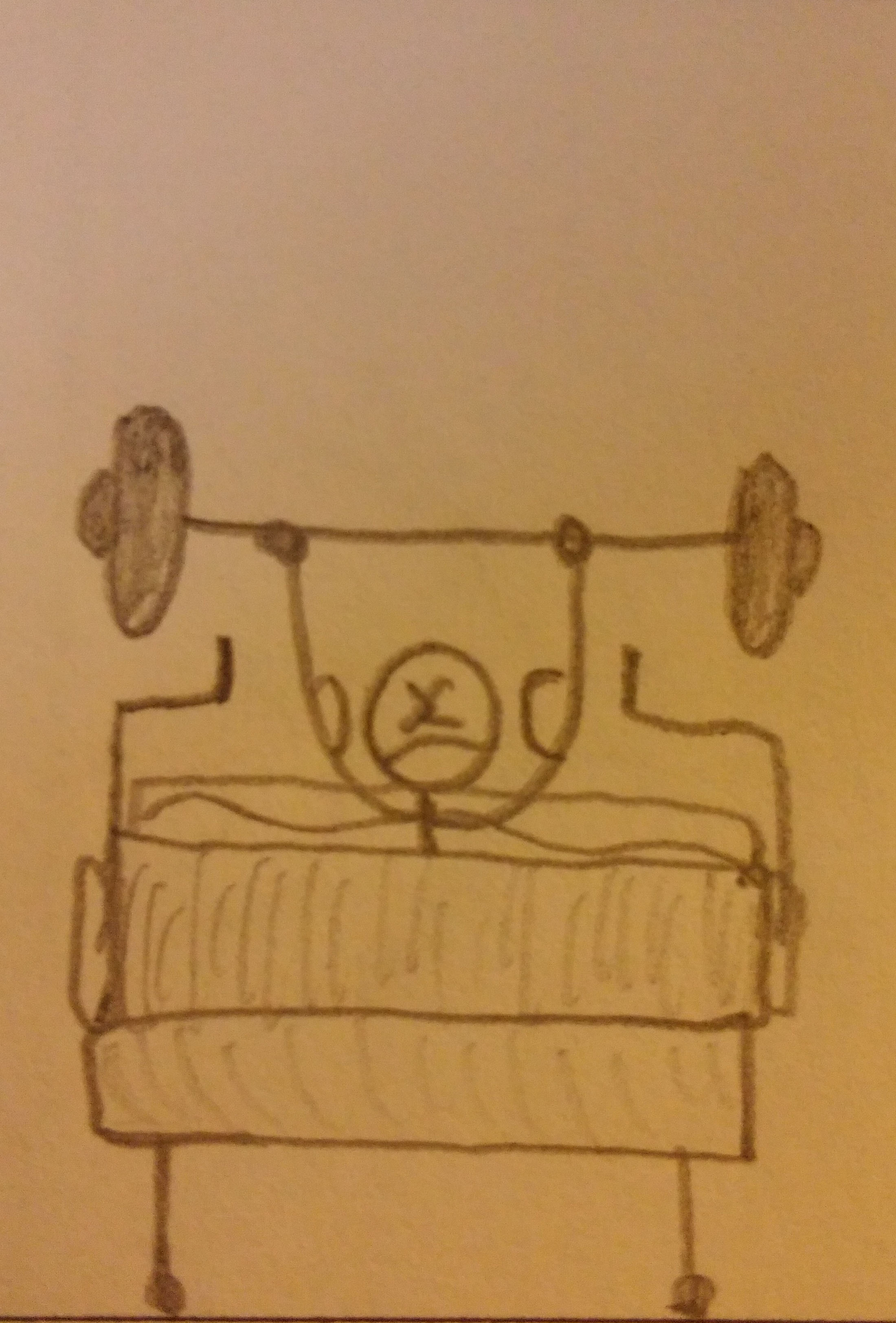
The Bed Head Balloon is the perfect solution for crazy hair mornings. Imagine a balloon which you rub on your head to get rid of that jungle you call hair. Prom Wrench is a useful tool to have the perfect Prom experience without any troubles. Car has a flat tire on the way to your breath taking night? Use the Prom Wrench to switch out the tire, it will even impress your date. The Tiger Knife isn’t your dad’s normal knife. It’s the sharpest tool in the shed, great for trips like camping, self defense, and learning how to throw a knife. Toilet Backpack is a sanitary on-the-go Porta Potty for long trips. Adventures behold a revolutionary way where you don’t make a mess yet still go to the bathroom whenever and wherever you wanted. The Vomit Vacuum is a college students best friend. Did your roommate come home late and puke on the floor? No worries, this Bluetooth puke sucker will get out all the nastiness from tough areas like carpets or couches.  Smart Grill is the next generation of thug life wireless mouth connectivity. With the power of Bluetooth and smartphones you can track what goes in your mouth, calculating caloric intakes. The perfect tool to help figure out weight loss by dieting. Energy Honey gives the right nutrients for a good days workout. Put Energy Honey in tea, on toast, or even eat it by spoonfuls to get great work out results. Hospital Bed Weights are for those who struggle in hospitals yet want to stay in shape at the same time. This revolutionary mattress set holds different types of weight lifting exercises to keep your body in tip top shape. The Bear Belt is a sturdy leather belt with a Tiger Knife sheath extension. Show off your belt fashion sense while intimidating others proving that you can get out of any death like situation with a comfortable belt. And finally, the Language Machine is a portable device which will translate your language so you can talk to anybody in the world. This incredible device will be the worlds next hottest item, proving that technology can help nations talk freely with one another without the frustrations of learning a whole new language.


Here are a few of my thumbnails

Thumbnail-1

Language Machine

Thumbnail-2

Prom Wrench

Thumbnail-3

Toilet Backpack

Thumbnail-4

Hospital Weight

4 Tool Post   b Add comment

Leave a Reply


Thoughts:                                                                                                                                                                                                                                I found this project to be different from what I usually do, but at the same time enjoyable and interesting. The process itself was fun to do, especially sketching out the tool combinations. Being able to get with another person to create the mind maps, helped expand our ideas and made it easier to pick out what I wanted to create on the thumbnails.

Mind Map:

20150903_150915

This is one out of three of the mind maps that me and my partner created. This one seemed to have the most ideas on it.

Tool Combinations:

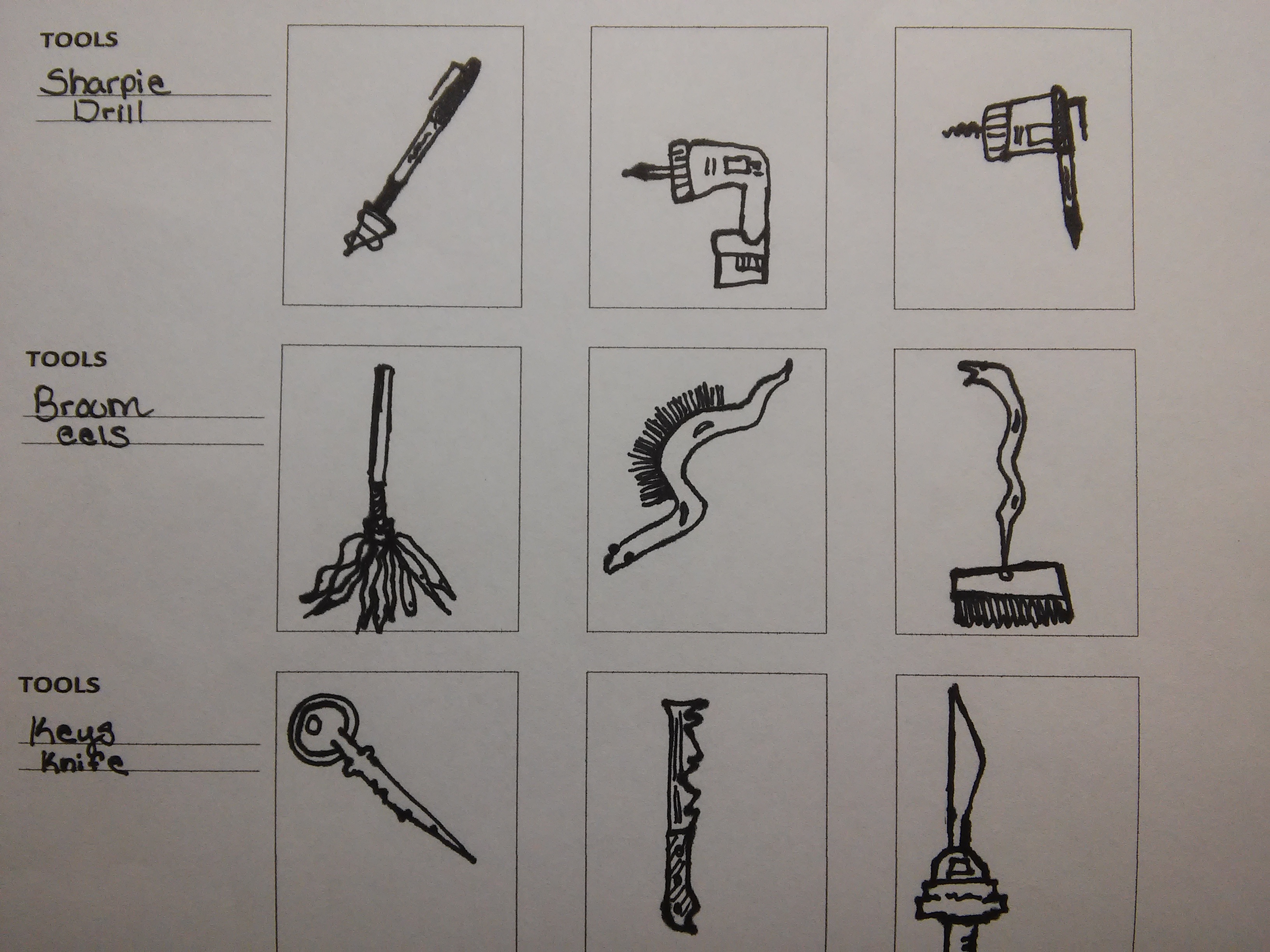
  1. Sharpie + Drill
  2. Paper clip + Button
  3. Broom + Eels
  4. Keys + Knife
  5. Pen + Nails
  6. Spoon + Scissors
  7. Button + Soda can
  8. Ruler + Hammer
  9. Fork + Panda
  10. Carrot + Wires
  11. Shark + Magnets
  12. Compass + Headphones
  13. Chalk + Cheese
  14. Hamburger + Elevator
  15. Box + Bulldozer
  16. Paintbrush + Shoes
  17. Sunglasses + Socks
  18. Sun + Cigarettes
  19. Needle + Arrows
  20. Train + Phone
  21. Butter + Hose
  22. Cage + Bowl
  23. Mushroom + Toilet
  24. Birdhouse + Marble
  25. Puzzle + Plate

Top Ten Tool Choices:

  • Sharpie + Drill – This would be a fun combination to draw because right away I thought of a sharpie where the drill bit would go.
  • Broom + Eels – I thought since eels are wet and slippery, it would be cool to make a broom that could slide across the floor and clean by itself.
  • Keys + Knife – I thought of a sharp object that could protect you, cut your meals, and at the same time get you into your house.
  • Pen + Nails – I thought this would be easy to create but at the same time a useful tool to have around.
  • Spoon + Scissors – I thought of creating a multi-tool that could be useful but weird at the same time.
  • Ruler + Hammer – being able to have a ruler to measure out where the nails should be placed, and then having a hammer right in your hand to hammer them in
  • Shark + Magnets – I thought it would be fun because it would attract more fish to feed the shark.
  • Compass + Headphones – Right away I thought of the headphones being the arrows to the compass
  • Hamburger + Elevator – I thought this would be fun to do because who doesn’t want to ride in style.
  • Mushroom + Toilet – I thought it would be fun to create something funny, but at the same time “stylish”.

Thumbnails:

20150907_160245

These are only a few of the thumbnails that I created out of 30.

4 Tool Post   b Add comment

Leave a Reply

The reason I am taking graphic design is for another passion. I wish to become better at communicating. I want to learn to communicate and express my ideas and thoughts more clearly to those around me, which can be used in any field or major. I am a nursing major, which does not really have much to do with graphic design. However, being expressive and well at communicating is greatly important in this field, and by learning the ability to express my ideas, I will be better equipped for my major. I also have always had a desire to be more artistic, but have never followed up on it. So, this class will also be helping me with increasing my artistic abilities.

Motion Design
I thought motion design was interesting. It is not only deciding how a picture should be designed, but adding sound and movement to the picture to tell a story. As an example of why motion design is interesting to me- I often think the trailer to a movie is more interesting than the actual movie, which shows how motion design advertises the movie well. This video, in the link below, shows how many different ways motion design can be used, and how long motion design has been used for (I thought that using it in a 3-D way was the best one). I have always wanted to create a short film from animation, so this was very interesting to me!
https://www.youtube.com/watch?v=fzGXSpmNHzc

Type Design
I also thought that type design was very interesting. I thought so because I had never thought of fonts and typeface as graphic design. Fonts are always needed for anything and everything on a computer, and would be incorporated with basically every type of graphic design that has any word or number involved with it. I was interested to know how the designer would think of a font and write it out, so I searched for it. This is what I found: http://www.fastcompany.com/3028881/most-creative-people/what-its-like-to-design-a-font-from-scratch

This article explains one man who designed famous fonts, such as Times New Roman and Ariel. In the pictures on the side, it shows how they write out each letter, scan it, and get as close to the outline of the letter as possible. My aunt actually does calligraphy, which is another reason I thought this was interesting! My handwriting can be really nice (when I try…), so this would be a good design for me to work on.

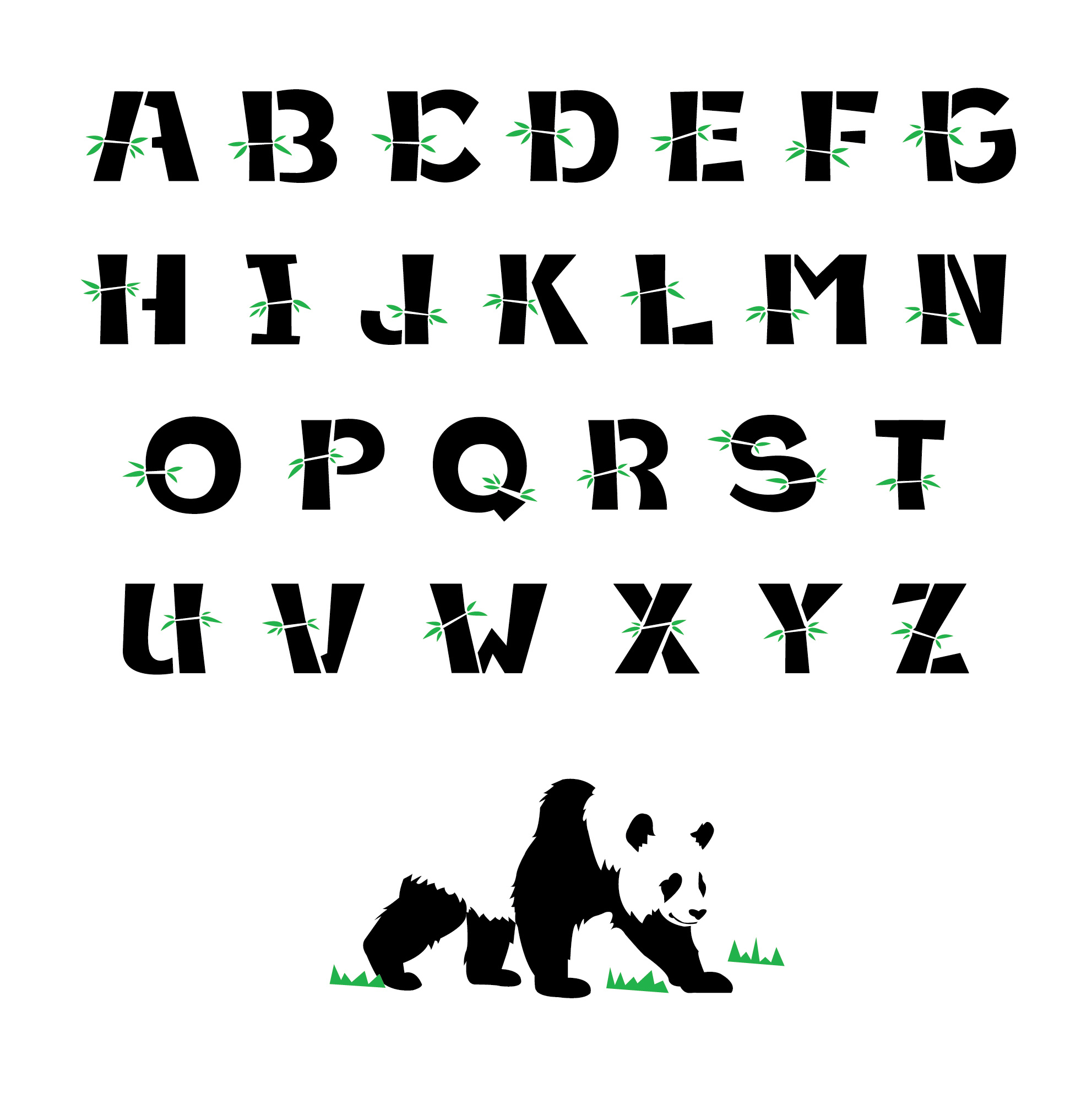
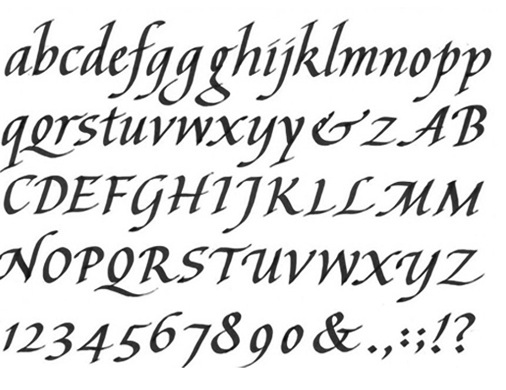
I also found a few typeface design that I thought looked cool.


4 Design Interests   b Add comment

Leave a Reply

Paul Rand
Design and the Play Instinct part of the reading caught my eye. It was in the first question that really spiked my interest when the question was answered by stating that there are no formulas in creative work. Design is something that must be made up from your inner artist. It has to come from with in and be original and I believe that this specifically is a huge part in design that an artist has to display in their work in order to be original and successful.

The article called Failure by Design was another one that interested me. The title was a little strange to me and honest I clicked on it because I was born in 1993 and I saw the year and immediately went to it. There is a quote that says, “Why is the average graphic design effort today merely average at best?” and I partially agree with it. Art will only get better and will change it’s path constantly over time. That’s what I like most about art. If art was at it’s peak pack in the 80’s then there would be no chance for artists of this century to prove themselves. That’s why art is by opinion and every piece attracts a new crown which I love about the job. It gives each artist to make it their own.

4 Design Interests   b Add comment

Leave a Reply

What draws me into graphic design is just that I’m a very visual person and I absolutely need to have some form of career where i can get involved with visual things of any kind. I thought about numerous academic routes i could go down to fulfill this passion. At first i decided to major in computer science as i have always been interested in making videogames, but then the realized the amount of nitty gritty technical stuff i had to learn before i could get to anything fun like working with computer graphics just wasn’t worth spending four years in college. After leaving computer science, i flip-flopped between architecture, product design, and studio art. I eventually landed on graphic design because i figured that as a major, it would have a nice emphasis of on working on visual things, while being balanced out by the fact that it is a fairly transmutable skill, unlike probably studio art. Also the notion of taking images and repurposing them for other motives is a really appealing one to me. It’s always entertaining for me to think about what something means if taken outside of its natural context. Like what if an Olympics took place underwater, or inside of a department store, or at my house. It would completely change people’s perception of the event. The ability to play on perception and expectation is a pretty intriguing prospect to me.

Two of the graphic design fields that have peaked my interest would be environmental design and advertising. I might be able to appreciate environmental design because I like the restriction of designing for a physical space. I enjoy thinking about how to cater to demands of a facility while keeping a consistent and appealing aesthetic motif. As for advertising design, i admire the tight interplay between text and image. I feel like making a good advertisement might be like making a comic that tells it’s story in the course of a single panel. One of my favorite things about advertisement is how it’s never just about what is there, but what isn’t. A good advertisement should instantly grab your attention and afford the viewer space to continue thinking about design after they’ve looked over it.

4 Design Interests   b Add comment

Leave a Reply

í Tools Mind Map

forced_connecticon

Combine two different types of tools together into one image using a forced connection.

Create images that are as seamless as possible. Design 10 unique and compelling tool montage compositions.

Mind Map a Lot of Ideas

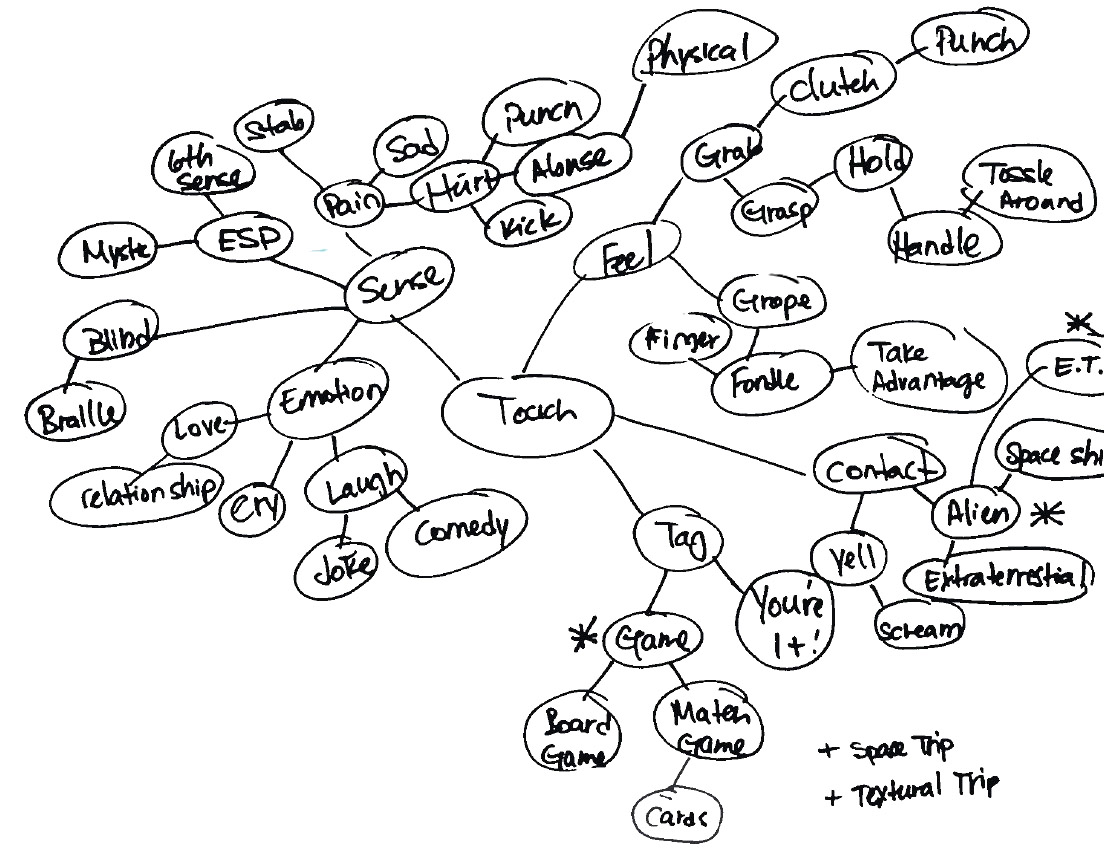
Create three mind maps on the subject of TOOLS with your classmates. Read about Mind Maps in the Graphic Design Thinking Book on page 22.

1
The mind maps should be on 8.5×11″ white unlined paper.

2
Use a strong thin black marker.

3
Write clearly and legibly.

4
Draw lines in between ideas.
mindmap


Combine
Make 25 incongruous pairings of tool names. The stranger and more interesting the better. Choose words that evoke images or ideas in your mind. Use these words to search for images and to inspire your ideas. You may use a tool or one in two different pairings if necessary. Write down these twenty tool pairings.

Select
Select 10 of those pairings to explore with thumbnails. Make 3 sketches of each of your 10 tool  combination ideas. You will have 30 sketches, or three sheets when you are done. Each sketch must be a completely different idea from the last one. Use different angles of tools for variety.

Image Research
While you are sketching it may be helpful to see images of the tools you are drawing. Collect 3-5 images for each tool. Put them a separate folder for each pair to organize them. You will need to collect around 60-80 images. Don’t worry, it will not take long. Consider using specific search terms “ball hammer”, or “ww2 bomb” instead of just ‘bomb’.

Read
Read about Forced Connections in GD Thinking…

FinderScreenSnapz003

GD Thinking / Forced Connections


Due Wednesday, Sepetember 9

  1. 3 Mind Maps per group. Each member should Photodocument them to use in your personal research.
  2. Do 3 thumbnails for each tool pair (three sheets of thumbnails)
  3. An organized collection of research images for each of your tool combinations.
  4. A web post documenting your research.
    (categorized as “Tool Montage Post”) The purpose of this post is to encapsulate your research and preserve it for the course. Include the following:
    > A few words about your response to this project.
    > One of the mind maps from your group.
    > Your 25 possible tool combinations as a list: 1. hammer + garden hose, etc
    > your 10 choices and a sentence as to why this would be fun to do.
    > A few of your best thumbnails. Not all of them. Just a sampling of the best ones. You can use this template to organize your drawings: tool_montage_thumbnails

You can shoot pictures of your thumbnails with your cell phone or camera. Shoot in good, even lighting. Re-shoot blurry shots please….


Image preparation

  1. Select 10 different pairs of tools.
  2. Search the web for clean, images of good resolution (800px – 2000px). Try to find iconic images that you can separate from the backgrounds.
  3. Make a new folder in your ’01_Future Tools’ folder called ‘source’. This is where you store original web images.
  4. Make a new folder called ‘bitmaps’. This is where you save the finished high-contrast .PSD files
  5. Open these images in photoshop and turn them into grayscale images.
  6. Resize the images using ‘image size’ to 300dpi at 100%. The minimum dimension should be 6-8 inches.
  7. Isolate the main object from the background by selecting around them with the Polygon or magnetic lasso tool.
  8. Press ‘command + J’ to create a new layer with just the selection
  9. Delete the background layer.
  10. Take care to create clean images. Clean up any stray details you don’t want with the eraser tool.
  11. Save the image as .PSD into a the ‘sources’ folder.
  12. Adjust the contrast using ‘Levels’ to ‘bump up’ the black. Make the image slightly darker than you might normally.
  13. Turn the image into a ‘bitmap’ using the ‘50% Threshold’ or ‘halftone’ filters.
  14. If the image is too washed out or too black do ‘command + z’, make adjustments with levels and re-bitmap it.
  15. It you can’t make the image readable and strong then choose a different image.
  16. When the image looks good then ‘save as…’ (don’t save over your grayscale image!) into a new folder called ‘bitmap’.
  17. Repeat this process for all images.

Image Montage

  1. Create a new illustrator document at 6″ x 6″
  2. Save the image into the main ’04_montage’ folder
  3. ‘Place’ the images (shift + command + P) into the document at the correct size.
  4. Position them into a compelling relationship that is a cultural commentary.
  5. Take care to make a dynamic and powerful composition. Do not fill the space. Use the white space effectively.
  6. Create a ‘clipping mask’ if necessary with the pen tool using the ‘object > clipping mask’ from the menu.
  7. Adjust the images and clipping masks as necessary.
  8. Create a new art board and build more images.

Due Monday, February 23

  • Do 3 versions of each of the 10 montages using the same images.
  • Choose the best one for each montage and print (10 total)
  • Bring 10 dynamic, compelling image montages that create powerful incongruous meaning relationships.
  • Printed, trimmed, ready to hang
  • PDF with all 30 montages on DropBox
b Add comment    

Leave a Reply

B READ: GD Thinking Chapter 1

AcrobatScreenSnapz001


Read Pages 4-25

Use this PDF if you do not have the book yet: GD Thinking Chapter 1

What did you think of the ideas here? Choose a few different pages, concepts, or featured projects and post a quick comment right on this page (not a full post), just a paragraph of your reactions.

 

b 20    

20 responses to “READ: GD Thinking Chapter 1”

  1. Christian Alejandre says:

    I personally found this section of the text to be pretty enlightening. There was a certain part that stood out to me the most (because I was guilty of this sort of thinking early on), and that was the part about the process of getting your ideas out onto paper in some way, shape or form. When I had first started to take design classes, I didn’t understand the reasons behind crazy brainstorming and drawing out thumbnails because I thought they were unnecessary and a waste of time. Just like the book, I thought, “can’t a creative person just sit down and be creative?”. I had the mentality that once I had settled an idea in my head I was sticking to it, that it was going to be my only option, and that everybody was going to love it as much as I did. Thankfully, over the years I’ve come to realize the benefits of getting everything out and exploring a multitude of different possibilities because limiting yourself is in no way beneficial. None of the courses I’ve taken previous to this class have gone too in-depth with brainstorming and mind-mapping though, so I’m excited to see how these different techniques work out for me in the long run.

  2. Nick St. Amour says:

    The first chapter was great start because it had shown me how to brainstorm for problems and solutions. I always had trouble thinking of ideas on the spot, but just like mind mapping the other ideas sounded wicked helpful. Focus Groups were cool because it’s just like surveying questions to the intended audience if your design is working or not. The Baltimarket case study was a great example which showed that you need to have a design that works for the people around the area and not just the designer. Without asking anybody in a focus group, how could you know that your design is actually working for what it was intended to do. You can even get greater new ideas that could work better from an audience member rather than thinking of ideas on your own. Another brainstorming idea that caught my attention was the visual research. I didn’t quiet think this was a type of research until I read this chapter. If you know what your design is going to be about you can look up images online and base your design off of different colors, textures, and patterns that are correlated to your research. Can’t wait to start using these brainstorming methods while designing in the future.

  3. Julie Elwell says:

    This reading was actually pretty eye-opening and interesting in the way that brainstorming can be so simple, but still get results from it. One particular example from the reading that caught my attention was how they used simple action words to act upon an idea. Though there was a consistent idea throughout each of the designs, each one was different and had unique qualities. The use of the words changed each design enough to give it a fresh perspective. I also liked the idea of group brainstorming because even though you may think you have the greatest idea, there’s always going to be someone who doesn’t like it or has an idea for something even better. Sharing your ideas with a group can help to broaden your own perspective and figure out the best solution to a problem. Even if you disagree with some ideas or think that they are boring or cliche, you can still take and build from those ideas by adding creative touches of your own or with the group. Either way, the group will walk away with a fresh new set of ideas to work with.

  4. Meaghan Casey says:

    I found this reading to be very interesting and rather shocking at the amount of work really goes into projects. You see things in everyday life and you never really realize how many people were behind this specific thing and how long it really took. I thought the 3419 project was very fascinating. I found it kind of crazy how many things they went through in order to get the message out to the public. When they gave the kits to the children to see what they might find “eye catching” or interesting, I never really thought of that before. Putting things out there and seeing what people really want to look at. Another thing in the chapter was the brainstorming and the different steps involved. I’ve never been amazing at brainstorming because I always think that the things I’m coming up with aren’t going to work. Its almost weird that I never thought of putting down dumb things because you never know, a great idea could come from it! Also giving a time limit when in a group, I think that’s a great idea. It keeps people motivated and more likely to come up with ideas quicker.

  5. Julia Peet says:

    The reading was very interactive. I love the way the book itself was designed. It does not feel like a textbook. It feels like a Graphic Design book. It is easy to follow and it pops in such a way that is lively and colorful. It teaches, but it also gives off this vibe that it has a story behind it.
    I never realized how much work went into design. This book serves as a real eye-opener for just that reason. It talks about some of the concepts we’ve discussed in class, such as mind-mapping, but it also connects it to the real world. I never really knew that mind mapping was a widely used technique. The chapter serves to support the fact that there is so much more to graphic design than I originally thought.

  6. Bailey Rose says:

    You can really tell that a bunch of graphic designers wrote this book. It’s very easy to understand and interesting. It’s rare to find a textbook that engages and connects with the world as smoothly and captivatingly as this one does. This reading was very enlightening and again, it proved to me that graphic design is much more complex than I had thought. I always thought brainstorming and the creative process was the least important part of art and design because I figured the idea would just come to you. I never realized the numerous techniques of boosting creativity that are out there and being used by actual graphic designers. I have never spent much time elaborating on my ideas or doing thumbnails or brain maps. This section has taught me that not only are all these things necessary but they are done by many, if not all graphic designers. It makes me think of the amount of work that goes into the ads and graphic art I see everyday that I didn’t even realize was a part of the process. I think having read this section I will take brainstorming and rough drafts such as thumbnails and sketches much more seriously and I am excited to see where that leads me in futures projects.

  7. Matt deWolf says:

    I like the fact that this book about graphic design is a work of graphic design. Its more visually pleasing than say a text book that could contain some of the same information. I also like the case studies, as they are an effective way to show real world application of the way ideas are born. I appreciate the fact that there is a break down of how to brainstorm. There is the normal way to think about it, as in just trying to come up with ideas, then there is the mind map. Its reassuring that you can literally write down anything and it doesn’t matter how far out the idea is from the subject matter. What stuck with me was that working in groups seems to be the best way to come up with the best ideas.

  8. Christina Lyons says:

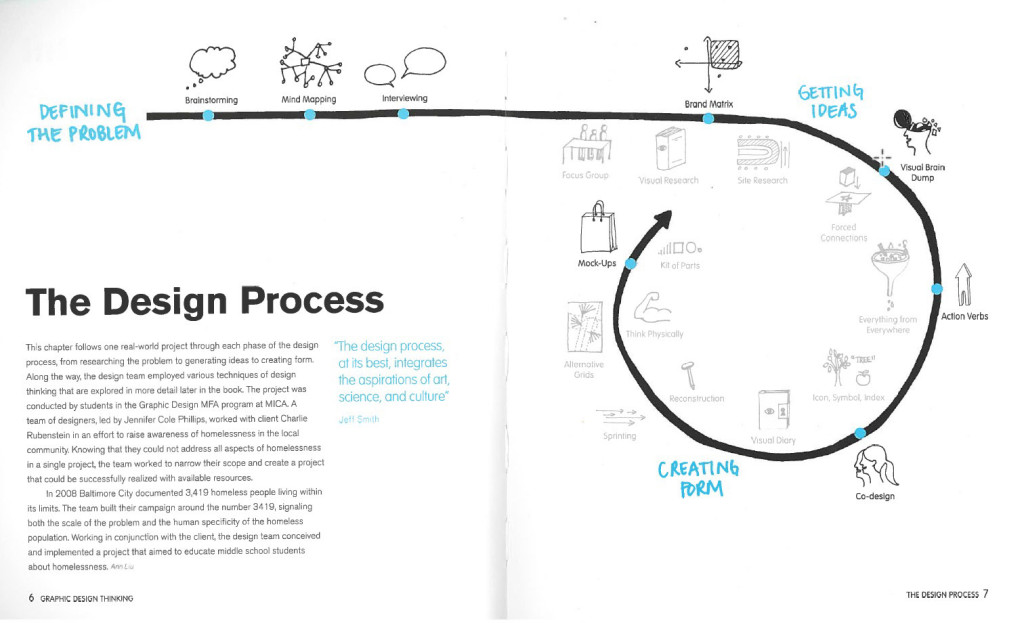
    I really enjoyed reading this chapter, since it talks about the creative process. There are so many ways to tackle a concept, but this book really breaks it down well. You not only can use these concepts for just graphic design! The image the book uses on page 7 shows the process of an idea in graphic design. In all of the art classes I’ve taken there has always been a visual brain dump done (my favorite portion of the process personally). I really like how the book takes a single project done and it takes the reader step by step, without getting too overwhelming. This book is really going to be a great tool since it has these excellent visuals. I’m still a beginner to graphic design and this book has already taught me greatly on the creative process done, because quite frankly I was unsure of how it was done! I also enjoyed that the
    3419 project the book uses as an example was a collaborative effort, just like the Tool Montages we have worked on.

  9. Courtney Sheehy says:

    The ideas in this book gives me a new perspective on how to tackle graphic design, and simply designing in general. Page 10, explained how to create an action word into an object and the thickness, stretching and other ways to manipulate your message. Also page 15, described how every designer starts with a problem; for instances, improving a design, creating a logo ect. This offers me a new way in approaching “problems” throughout my graphic design career.

  10. Brendan Belzil says:

    I really enjoyed the layout and design of the images on pages 6-7 and how they seem to be hand drawn to really give a good understanding of the design process. The text goes on to give a better understanding of the visual concepts giving examples such as the homeless awareness project where a team of designers had to go through an extenuating design process of creating problems and solving them. I also enjoy how the book highlights key segments in blue and explains them into further detail on the side of the page. The brainstorming techniques that the book gives examples of are very helpful and seem to be used a lot in today’s graphic design world.

  11. Gabrielle Holveck says:

    I really liked how they chose one project and stuck with it throughout the chapter so the readers could see it go through the entire process start to finish. It really showed how something so small and simple and grow into this large scale project after just producing a few ideas. Personally I’m a visual learner so I enjoyed all of the graphics on each page that showed different ways of thinking such as the action verbs and brain dumping on page 10. I also really liked the book’s version of mind mapping and how it included pictures as well as words and different colors. This chapter showed how much work and ideas and also scrapped ideas that go into projects and what it takes to be a designer.

  12. Jess Caldwell says:

    This book is very interesting and visual. I think by being so visual it actually helps to explain and display ideas easier. On page 10 it talked about “Getting Ideas”. I thought it was really cool to see artist take the same object and re-creating many different ways. I usually find some difficulty in coming up with one idea, let alone eleven. I thought the Brainstorming article on page 16 to be rather helpful. It gives you step by step instructions on how to brainstorm correctly. It was also intriguing to see the pictures of the different mind maps people have done and how they approach it differently either with just text or drawings with text. Also how many ideas they could come up with with just a single topic. I think mind maps can be very helpful and fun to do.

  13. Dylan Cobelli says:

    This is a pretty interesting look at some of the work that graphic designers do. I especially liked the page that showed the back and forth conversation between a graphic designer and a client. It was a good to mention how a client may not always know exactly the best way to shape their ideas and that a graphic designer should be open to and acknowledging of other possible routes the design could take. The part about the origin of brainstorming and how it actually refers to overwhelming a problem with a variety of different ideas was a nifty fact.

  14. > Jamie Halloran says:

    After reading this chapter, it made me think more about the way I start my design process. I found it to be very helpful and insightful on helping me improve my design skills. Every time I would work on a project I would brainstorm ideas, but I never thought of how important it really is in the design process. In the reading, page 10 and 11 really caught my attention. It talked about the different designs that were created from just brainstorming ideas. I started to realize that brainstorming and mind mapping ideas is the foundation of it all to start the magic. I liked the example of the mind map on page 22. Having the maps have colorful and cool pictures to go with the words makes the process of brainstorming more interesting. I wouldn’t mind trying that more when I create a mind map next time.

  15. Kate Jones says:

    After reading this chapter I noticed the design precess a graphic designer goes through for every project their involved in is much more extensive than one would originally think. The first quote in the chapter is “The design process at it’s best, integrates the aspirations of art, science, and culture” -Jeff Smith. This quote suggests that graphic designers are so much more than just artists, they’re problem solvers that not only have to makes something aesthetically appealing but effective and sensible as well. The process involves many steps. At first the designer must define the problem, then they need to brainstorm; which they can use techniques such as mind mapping and even interviewing. Mind mapping is a form of mental research where a designer will start with a central term/idea then quickly and efficiently write out associated concepts and images. After thorough brainstorming the designer is able to get ideas and eventually create form, which allows them to experiment with mock-ups and choose the best version. This ongoing process was seen in the example of the 3419 campaign ( a project that aimed to educate middle school students about homelessness, where students were given a kit to create their own pillowcase posters). This chapter excited me about the process of graphic design because there are so many in-depth and exciting steps to reach a final product.

  16. Danielle Vizard says:

    In this chapter I had learned a lot about all the work that goes into graphic design, and it is way more than I have ever even considered. Each project take up so much thought, concentration and time. On the streets or in your home or even the store, no one even takes the time to look and examine the design of something on a box or whatever it is they are looking at. It just goes to show how under appreciated graphic designers work is.

    This chapter gives me a good understanding on how people make brainstorming seem way more difficult than it is. Personally I used to hate brainstorming because I always felt pressured to have a list out but I had no idea what to write down. I tend to be bad under pressure. But I learned that as a graphic designer I’m going to have to get used to it cause I will be graphic designing for a long time. Also there are so many ways to brainstorm, I’m interested on how each method is going to work for me.

  17. Julia Hannan says:

    After reading this chapter, I have found a new and different way to process a thought into a design. I love all the graphics within the book, as I am more of a visual learner, so it is great to see everything drawn out. I really liked the 3419 project and all the different mind-mapping tools they used, especially the brainstorming of can, want, and are on page 6. I also love the idea of a brain dump, and how everything you think of could be relevant to your project, even though it may not make sense while you are writing it down. How the authors of this textbook used the 3419 project throughout part of the chapter was very interesting as well. I also never realized how many designers went into a single project. So much time is spent on a single campaign. This text is an eyeopener and I will definitely be looking at logos and other various signs with more appreciation.

  18. Mikayla Doggett says:

    I thought it was interesting that the book said “Brainstorming quickly became a popular way to help people think creatively-even people who don’t consider themselves creative at all.” It also talked about how everyone has the ability to improve their creativity. This inspired me. Often times I feel like I’m not improving at all, but this section gave me hope that I can improve as a designer. I had no idea how much work can go into one project. The ideas of multiple people are often better than one person. It provides a broader view and can provide the client with a better final result. I found mind mapping interesting. Since a problem can take a long time to figure out a solution to, it’s important to get good ideas quickly. Mind mapping allows you to explore your own mind while getting ideas fast. It is an interesting way to brainstorm.

  19. Joseph Sullivan says:

    To the naked eye, graphic design may seem to be taken for granted. Most graphic designers go unrecognized their whole life and this chapter really demonstrates why designers deserve more credit than they get. Graphic design is a very demanding medium and this specific section of the book really outlines how much work really goes into this art form. I found it interesting when the book discussed the collaboration aspect of design because even I personally considered graphic design to be more of an independent career. I thought it was a good chapter to read especially before mind mapping in class as a group, because it got me to accept the fact that using multiple brains is important before actually having to implement this skill in real life.

  20. Austin Drouin says:

    I thoroughly enjoyed the reading of this chapter as it is rare to find a college level “textbook” that engages so smoothly with its readers as well as with its subject matter. The chapter serves to prove that graphic design is a widely vast and creative career, which includes a lot of collaboration between members of a team. It also gave me an greater understanding and appreciation for the field of graphic design as its own form of an art. This chapter has encouraged my success and thrive for a greater education concerning the ideals of Graphic Design, and I’m excited to employ these skills into modern and current projects.

Leave a Reply

My History With Graphic Design
Design in general is something I have always been interested in and loved doing. Whether it be moving the furniture around in my room and redecorating the house or designing a poster for a class, I’ve always gravitated towards the aesthetics of life. I enjoy making and appreciate good art of any form. I have loved technology and computers since I was as little as I can remember so it only seems right to combine the two! I have always gone above and beyond when assigned a poster or brochure or illustration in school because I always have so much fun making them. As I’ve gotten older and artistic assignments in school became more rare, I haven’t had a reason to create graphic art so I have lost my love for it. For this reason, I am excited to dive back into it and learn how it can become a part of my everyday life possibly as a major and then as a career!

Type Design
After reading the chapter, I was surprised by how many different paths a graphic designer can take. One path in particular that I found to be intriguing was a type designer. I had never thought about how the fonts I’ve become so familiar with came to be. I would be interested in learning more about what it means to be a type designer and what kind of work would be available. I think the psychology behind how and why font affects the way we percieve something is fascinating. Linguistics and written language is something I’ve always questioned and been interested in so I’d love to learn more about the process of creating fonts.

I always doodle things like this in my notebook:

Advertising Design
Another field of graphic design I would find interesting is advertising design. I find the way our brain can be persuaded simply by colors and shapes fascinating and I would love to learn how to use that information to make someone feel or think a certain way. Advertising and commercials are such a huge part of todays world. There are so many famous logos and commercials that everyone has seen or heard of and could recognize as belonging to a certain company. I would love if something I designed ever became that well known. Again, the psychology behind the design and the reasons for the shape and color and whatever emotion the ad is trying to portray is something I would love to learn more about.

Here are some ads/logos that I think are particularly effective/inspiring:

I think this is very shocking and not normally socially accepted to illustrate something so evil and therefore it really gets the attention of the viewer. It makes you think of smoking much more seriously and maybe this image will be stuck in the viewers head when they smoke because its so harsh. Its a very honest approach to anti-smoking ad, its not sugarcoated at all, and therefore very effective.

I think this is cute and creative. It makes Heinz seem less of a factory and more of a fresh farm. Whether or not thats true is a different story but this makes the viewer feel like Heinz ketchup is as fresh as a tomato itself.

I think this is so exaggerated that its actually funny. A man is supposed to look at this and think that if they use this cologne they will develop these great muscles and veiny arms and be super strong and tough. It’s so ridiculous that it actually works. I think this ad is funny and effective for giving Old Spice a very “manly man” reputation.

4 Design Interests   b Add comment

Leave a Reply